Off-grid power storage: a practical guide
Off-grid power storage allows electricity generated on site to be saved for use when generation is low or demand is high. It is a key part of systems that rely on sources such as solar panels, wind turbines or small hydro. With suitable storage, a property can use more of its own electricity and rely less on a mains connection or a fuel-powered generator.
Why storage matters
Renewable generation does not always coincide with the times electricity is needed. Solar panels may produce most of their power during the day, while a household’s demand often rises in the morning and evening. Wind power can also vary with the weather. A battery stores surplus electricity and makes it available later, helping to balance supply and demand.
Storage can also provide a reserve for periods of poor weather or unusually high use. However, a battery is not a source of energy in itself: it can only return electricity that has previously been generated or supplied to it, and some energy is lost during charging and discharging.
Common storage options
Lithium-ion batteries
Lithium-ion batteries are widely used in domestic energy systems because they offer high energy density, good efficiency and relatively flexible installation. Lithium iron phosphate (LFP) is a lithium-ion chemistry often used in stationary storage. Battery lifespan depends on factors including temperature, usage, charging limits and the manufacturer’s specifications.
Lead-acid batteries
Lead-acid batteries are a long-established option and may have a lower initial purchase price. They are generally heavier and require more care over charging and maintenance. Their usable capacity is typically lower than their stated capacity if deep discharging is to be avoided, so the system may need a larger battery bank.
Other technologies
Flow batteries and other emerging storage technologies may suit particular applications, especially where long-duration storage is important. They are less common in small domestic installations, and availability, cost and technical support vary.
Choosing the right capacity
The right battery depends on both how much energy a property uses and how much power it needs at any one time. Energy capacity is usually measured in kilowatt-hours (kWh); power is measured in kilowatts (kW). A battery with plenty of stored energy may still be unable to run several high-demand appliances simultaneously if its power output is limited.
Start by reviewing electricity use across a typical day and identifying essential loads, such as lighting, refrigeration, communications and water pumps. Then consider how many hours or days the system should cover without useful generation. Seasonal conditions matter: a solar system that performs well in summer may produce much less in winter. It is sensible to use local generation estimates and include a realistic allowance for losses, rather than designing around the best possible day.
Oversizing can add unnecessary cost, while undersizing may lead to frequent generator use or power cuts. A qualified designer can assess the generation equipment, inverter, battery, expected demand and any backup supply as one system.
Key system components
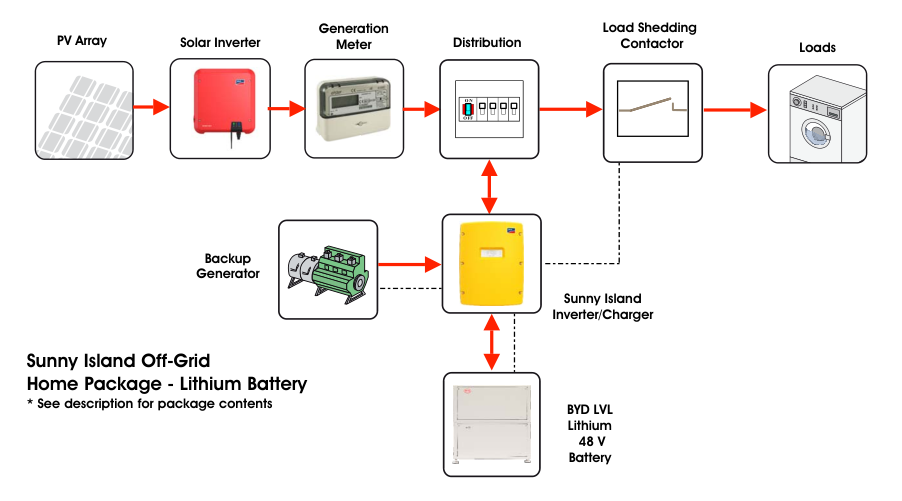
An off-grid installation typically includes a renewable generator, a charge controller or hybrid inverter, a battery management system, protection equipment and suitable cabling. The inverter converts the battery’s direct current into alternating current for many household appliances. Its rating must suit the connected loads, including the brief surge that some equipment requires when starting.
Some systems include a generator for extended periods of low renewable output. A generator can improve resilience, but it brings fuel, maintenance, noise and emissions considerations. It should be sized and configured to work safely with the battery and inverter.
Safety and installation
Batteries can store substantial energy, so installation and maintenance should follow the manufacturer’s instructions and applicable electrical and building requirements. Battery location, ventilation, temperature control, fire precautions, isolation and over-current protection all deserve careful attention. Use an appropriately qualified installer, and do not improvise connections or mix incompatible batteries and equipment.
Check the expected operating temperature, warranty conditions, monitoring features and availability of replacement parts before choosing a product. Good monitoring can show state of charge, generation and consumption, helping users adjust their habits and spot problems early.
Making an off-grid system work well
Storage is only one part of energy independence. Reducing demand can be just as important: efficient appliances, good insulation, LED lighting and thoughtful timing of energy-intensive tasks can reduce the size and cost of the system required. Flexible loads, such as water heating or laundry, can often be scheduled for times when renewable generation is plentiful.
A well-designed off-grid power system balances generation, storage and demand, while allowing for changing weather and future needs. Careful planning and professional installation can help provide reliable electricity without relying on the mains grid.
9 Essential Tips for Effective Off-Grid Power Storage Management
- Size storage for your daily energy use.
- Allow extra capacity for cloudy spells.
- Choose batteries suited to your system.
- Keep batteries within their recommended temperature range.
- Install suitable fuses and isolation switches.
- Use a compatible charge controller and inverter.
- Store batteries in a dry, well-ventilated place.
- Monitor charge levels and battery health.
- Follow the manufacturer’s safety and maintenance guidance.
Size storage for your daily energy use.
Size your off-grid storage around your typical daily energy use, measured in kilowatt-hours (kWh), and consider how long you may need to go without reliable generation. Check which appliances are essential and when they are used, allowing for battery and inverter losses as well as seasonal changes in solar or wind output. A correctly sized system can provide dependable power without the unnecessary cost of a battery bank that is larger than you need.
Allow extra capacity for cloudy spells.
Allow extra battery capacity for cloudy spells, when solar panels may generate much less electricity than usual. Estimate how long your system may need to run on limited sunlight, taking seasonal conditions and essential appliances into account. A suitable reserve can reduce reliance on a backup generator, but balance it against the added cost and have the system sized by a qualified installer.
Choose batteries suited to your system.
Choose batteries that suit your system’s voltage, inverter and charge controller, as well as the amount of energy you use. Consider usable capacity—not just the advertised capacity—and check the battery’s power output, expected lifespan, operating temperature and maintenance requirements. Batteries must also be compatible with one another and with your charging equipment. If you are unsure, ask a qualified installer to help size and select a safe, reliable battery bank for your needs.
Keep batteries within their recommended temperature range.
Keep batteries within the temperature range recommended by the manufacturer to help them operate safely and efficiently. Excessive heat can accelerate wear, while cold conditions may reduce available capacity and affect charging. Choose a well-ventilated, suitably sheltered location, and use temperature monitoring or control where needed.
Install suitable fuses and isolation switches.
Install appropriately rated fuses and isolation switches in your off-grid power system to help protect cables and equipment from faults and allow circuits to be safely disconnected for maintenance or in an emergency. Their type, rating and location should suit the system’s batteries, inverter and wiring, and comply with the manufacturer’s instructions and applicable electrical regulations. Have a qualified electrician select and install them; never bypass a fuse or replace it with one of a higher rating without professional advice.
Use a compatible charge controller and inverter.
Choose a charge controller and inverter that are compatible with your battery and renewable energy system. Check that their voltage, power ratings and battery settings match the manufacturer’s specifications; incompatible equipment can reduce efficiency, damage components or create safety risks. When in doubt, ask a qualified installer to check the system before connecting it.
Store batteries in a dry, well-ventilated place.
Store batteries in a dry, well-ventilated place to help protect them from moisture and excessive heat. Damp conditions can damage equipment and electrical connections, while good airflow helps prevent heat from building up during charging and use. Follow the manufacturer’s guidance on temperature, ventilation and clearance, and keep batteries away from direct sunlight and sources of ignition.
Monitor charge levels and battery health.
Monitor charge levels and battery health regularly to keep your off-grid system reliable and extend battery life. Use the system’s monitoring display or app to check the state of charge, charging and discharging patterns, temperature and any warning messages. If you notice a sudden drop in capacity, unusual readings or repeated low-charge periods, investigate promptly and follow the manufacturer’s maintenance guidance. Avoid routinely over-discharging batteries, as this can shorten their lifespan.
Follow the manufacturer’s safety and maintenance guidance.
Always follow the battery manufacturer’s safety and maintenance guidance to help keep your off-grid power storage system operating reliably. Use the specified charging settings, keep the battery within its recommended temperature range, and carry out only the inspections and maintenance described in the manual. Never ignore warning messages or attempt repairs unless you are qualified to do so; contact the manufacturer or a suitably qualified installer if you are unsure.