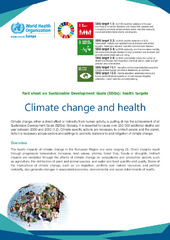
Climate Change and the Sustainable Development Goals
Climate change is one of the defining challenges of our time. Rising temperatures, changing rainfall patterns, more frequent heatwaves and other climate-related impacts affect communities, economies and ecosystems around the world. These pressures are closely connected to poverty, health, food security, energy, inequality and the natural environment.
The United Nations Sustainable Development Goals (SDGs) recognise these connections. Adopted in 2015 as part of the 2030 Agenda for Sustainable Development, the 17 goals provide a shared framework for improving lives while protecting the planet. Climate action is central to that ambition.
SDG 13: Climate Action
SDG 13 calls for urgent action to combat climate change and its impacts. Its targets include strengthening resilience to climate-related hazards, integrating climate measures into public policy and improving education and awareness. It also recognises the importance of supporting countries with fewer resources as they respond to climate risks.
Climate action involves both mitigation and adaptation. Mitigation means reducing greenhouse gas emissions or increasing the removal of carbon from the atmosphere. This includes shifting to low-carbon energy, improving energy efficiency, protecting forests and changing how goods are produced and transported. Adaptation means preparing for the effects of climate change, for example by improving flood protection, developing heat-resilient cities and supporting climate-resilient agriculture.
Climate change affects every goal
Although SDG 13 focuses specifically on climate action, climate change can influence progress across the entire framework:
- No poverty (SDG 1): Extreme weather and environmental change can damage homes, livelihoods and essential infrastructure, placing additional pressure on people already facing hardship.
- Zero hunger (SDG 2): Changing temperatures and rainfall can affect crops, livestock, fisheries and food supply chains.
- Good health and well-being (SDG 3): Heat, air pollution and climate-related emergencies can create health risks and increase pressure on health services.
- Clean water and sanitation (SDG 6): Droughts, floods and changing water availability can make it harder to provide safe and reliable water.
- Affordable and clean energy (SDG 7): Expanding access to clean energy can help reduce emissions, while resilient energy systems can keep essential services running during extreme weather.
- Sustainable cities and communities (SDG 11): Urban planning can reduce emissions and help communities cope with heat, flooding and other climate impacts.
- Life below water and life on land (SDGs 14 and 15): Climate change places further stress on ecosystems, alongside pressures such as pollution, habitat loss and overuse of natural resources.
These links work in both directions. Climate impacts can slow progress towards the SDGs, while action on other goals can support climate solutions. For example, improving public transport can reduce emissions while making access to work and services easier. Restoring wetlands can store carbon, support wildlife and help reduce flood risks.
A fair and inclusive transition
The effects of climate change are not experienced equally. People’s exposure to risk and ability to respond can depend on factors such as income, health, location, age and access to public services. Communities that have contributed least to global emissions may have fewer resources to prepare for climate impacts.
For this reason, climate policies should be designed with fairness in mind. A just transition supports workers and communities as industries change, expands access to clean and affordable energy, and ensures that the benefits and costs of climate action are shared equitably. Local knowledge and meaningful public participation are also essential: people affected by decisions should have a voice in shaping them.
Turning goals into action
Achieving climate-related progress requires action at every level. Governments can set clear targets, invest in resilient infrastructure and include climate considerations in planning. Businesses can reduce emissions throughout their operations and supply chains. Researchers and educators can develop and share knowledge, while communities can help identify practical solutions suited to local needs.
Progress also depends on measuring results. Reliable information about emissions, climate risks and social impacts can help decision-makers identify what is working and where further effort is needed. The SDGs provide a common framework for connecting these efforts, but their success depends on sustained commitment and cooperation.
Climate action as a shared opportunity
Climate change is a serious threat, but responding to it can also support broader improvements in people’s lives. Cleaner air, more efficient buildings, accessible public transport, healthy ecosystems and secure energy systems can benefit communities while helping to reduce climate risks.
The Sustainable Development Goals make clear that climate action cannot be treated in isolation. Lasting progress depends on connecting environmental protection with economic opportunity, public health and social justice. By pursuing these aims together, countries and communities can build a more resilient and sustainable future.
Five Everyday Actions for Climate Action and Sustainable Development
- Choose walking, cycling or public transport to cut emissions.
- Save energy at home with efficient lighting and insulation.
- Eat more plant-based meals and waste less food.
- Support renewable energy and climate-friendly policies.
- Protect local nature to help communities adapt to climate change.
Choose walking, cycling or public transport to cut emissions.
Choosing to walk, cycle or use public transport instead of driving can help reduce greenhouse gas emissions and air pollution. For shorter journeys, walking or cycling also brings health benefits; for longer trips, buses and trains can carry many people using less energy per passenger than individual cars. These everyday choices support climate action (SDG 13) and can contribute to healthier, more sustainable cities (SDG 11).
Save energy at home with efficient lighting and insulation.
Saving energy at home is a simple way to support climate action and the Sustainable Development Goals. Switching to energy-efficient LED lighting and improving insulation can reduce the amount of energy needed to heat and light your home, helping to lower greenhouse gas emissions and energy bills. These practical changes contribute to SDG 13 (Climate Action) and SDG 7 (Affordable and Clean Energy), while making homes more comfortable and energy-efficient.
Eat more plant-based meals and waste less food.
Eating more plant-based meals and wasting less food are simple ways to support climate action and the Sustainable Development Goals. Producing plant-based foods generally uses fewer resources and creates fewer greenhouse gas emissions than producing many animal-based foods, while planning meals, storing food properly and using leftovers can reduce the emissions and resources associated with food that goes uneaten. Together, these choices can contribute to climate action (SDG 13), responsible consumption and production (SDG 12), and more sustainable food systems.
Support renewable energy and climate-friendly policies.
Supporting renewable energy and climate-friendly policies is an important way to advance the Sustainable Development Goals, particularly affordable and clean energy (SDG 7) and climate action (SDG 13). Choosing renewable electricity where available, improving energy efficiency and backing policies that cut greenhouse gas emissions can help speed the transition away from fossil fuels. These changes can also support cleaner air, create new skills and jobs, and make communities more resilient—provided the transition is fair and its benefits are shared widely.
Protect local nature to help communities adapt to climate change.
Protecting local nature can help communities adapt to climate change while supporting the Sustainable Development Goals. Trees provide shade and cool streets during heatwaves, while wetlands, healthy rivers and green spaces can absorb excess rainwater and reduce flood risks. Restoring and caring for these natural areas also supports wildlife, improves wellbeing and can strengthen local livelihoods. By involving residents in conservation and planning, communities can choose solutions that reflect local needs and make neighbourhoods more resilient to a changing climate.