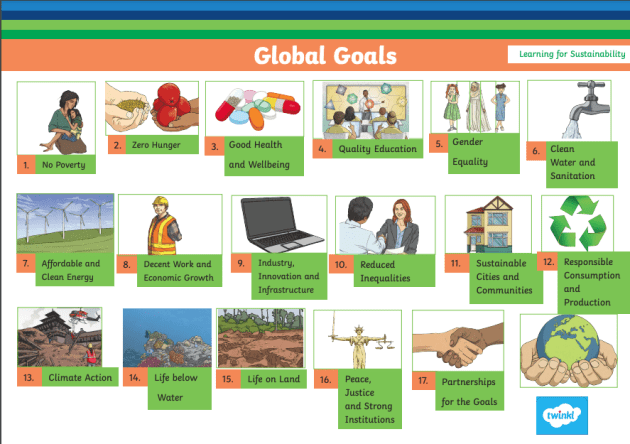
The 17 Global Goals for Sustainable Development
In 2015, all United Nations Member States adopted the 2030 Agenda for Sustainable Development: a shared plan to improve lives, protect the planet and build a more peaceful and prosperous world. At its heart are the 17 Sustainable Development Goals (SDGs), which address challenges ranging from poverty and hunger to climate change, inequality and access to justice.
The goals are interconnected. Progress in one area can support progress in others, while setbacks can have wider consequences. They apply to every country, and achieving them depends on action from governments, businesses, communities and individuals.
The 17 Sustainable Development Goals
- No Poverty: End poverty in all its forms, ensuring people can access essential resources, services and opportunities.
- Zero Hunger: End hunger, improve nutrition, achieve food security and promote sustainable agriculture.
- Good Health and Well-being: Support healthy lives and well-being for people of all ages.
- Quality Education: Ensure inclusive, equitable education and lifelong learning opportunities for everyone.
- Gender Equality: Achieve equality for women and girls, and remove discrimination and violence based on gender.
- Clean Water and Sanitation: Ensure access to safe water and sanitation, and manage water resources sustainably.
- Affordable and Clean Energy: Expand access to reliable, sustainable and modern energy.
- Decent Work and Economic Growth: Promote inclusive economic growth, productive employment and decent work for all.
- Industry, Innovation and Infrastructure: Build resilient infrastructure, encourage sustainable industry and support innovation.
- Reduced Inequalities: Reduce inequality within and between countries, including by promoting social and economic inclusion.
- Sustainable Cities and Communities: Make settlements inclusive, safe, resilient and sustainable.
- Responsible Consumption and Production: Use resources efficiently, reduce waste and make production and consumption more sustainable.
- Climate Action: Take urgent action to address climate change and its impacts.
- Life Below Water: Protect oceans and marine resources, and use them sustainably.
- Life on Land: Protect ecosystems, manage forests sustainably, combat desertification and halt biodiversity loss.
- Peace, Justice and Strong Institutions: Promote peaceful societies, access to justice and effective, accountable institutions.
- Partnerships for the Goals: Strengthen global cooperation and mobilise the resources needed to achieve sustainable development.
Why the goals matter
The SDGs provide a common framework for tackling issues that cross borders and affect people’s daily lives. For example, improving access to education can help reduce poverty and inequality. Clean energy can support economic development while helping to limit greenhouse gas emissions. Protecting forests and oceans supports wildlife, livelihoods and climate resilience.
The goals also recognise that sustainable development is about more than economic growth. It includes people’s health and rights, the quality of public services, the strength of communities and the condition of the natural world. The principle of “leaving no one behind” calls for particular attention to people and communities facing the greatest barriers.
Turning commitments into action
Governments play a central role through laws, public services, investment and international cooperation. Businesses can contribute by improving working conditions, reducing environmental impacts and developing more sustainable products and services. Local organisations and communities can help identify priorities and make solutions relevant to the places where people live.
Individuals can also contribute through everyday choices, such as reducing waste, saving energy, supporting responsible businesses and getting involved in their communities. Individual action alone cannot deliver the goals, but it can build momentum and encourage wider change.
A shared agenda for the future
The 17 Sustainable Development Goals set out an ambitious vision for a fairer, healthier and more sustainable world. Reaching them requires long-term commitment, adequate resources and cooperation across society. Although the challenges are significant, the goals offer a practical way to organise action and measure progress towards a better future for people and the planet.
Understanding the 17 Global Goals: Key Questions About the Sustainable Development Agenda
- What are the 17 Sustainable Development Goals?
- Why were the Sustainable Development Goals created?
- Who agreed to the 17 Global Goals?
- What is the main aim of the 2030 Agenda for Sustainable Development?
- How are the 17 goals connected to one another?
- Who is responsible for achieving the Sustainable Development Goals?
- How can individuals help achieve the Global Goals?
- How is progress towards the Sustainable Development Goals measured?
- Are the Sustainable Development Goals legally binding?
What are the 17 Sustainable Development Goals?
The 17 Sustainable Development Goals (SDGs) are a set of shared aims adopted by United Nations Member States in 2015 as part of the 2030 Agenda for Sustainable Development. They cover challenges including poverty, hunger, health, education, gender equality, clean water, energy, decent work, innovation, inequality, sustainable cities, responsible consumption, climate action, life below water and on land, peace and justice, and global partnerships. Together, they provide a framework for improving people’s lives while protecting the planet.
Why were the Sustainable Development Goals created?
The Sustainable Development Goals were created to give countries a shared plan for tackling the world’s biggest social, economic and environmental challenges. Adopted by all United Nations Member States in 2015 as part of the 2030 Agenda, the 17 goals build on earlier international efforts and recognise that issues such as poverty, inequality, poor health and climate change are closely connected. They provide a common framework for cooperation and action, with the aim of improving lives, protecting the planet and ensuring that no one is left behind.
Who agreed to the 17 Global Goals?
The 17 Global Goals, formally known as the Sustainable Development Goals (SDGs), were agreed in 2015 by all 193 United Nations Member States. They form part of the UN’s 2030 Agenda for Sustainable Development, a shared commitment to tackle poverty and inequality, protect the planet and improve well-being worldwide.
What is the main aim of the 2030 Agenda for Sustainable Development?
The main aim of the 2030 Agenda for Sustainable Development is to create a fairer, more inclusive and sustainable world by 2030. Adopted by all United Nations Member States in 2015, it sets out 17 Sustainable Development Goals to tackle poverty and inequality, improve health and education, protect the planet, promote peace and strengthen cooperation—while ensuring that no one is left behind.
How are the 17 goals connected to one another?
The 17 Sustainable Development Goals are closely connected because progress in one area can support—and depend on—progress in others. For example, quality education can improve employment opportunities and help reduce poverty and inequality, while access to clean energy can support health, economic growth and climate action. The goals also highlight potential trade-offs: economic development should not come at the expense of ecosystems or people’s well-being. This interconnected approach encourages governments, organisations and communities to consider the wider effects of their decisions and pursue solutions that benefit people, the planet and prosperity together.
Who is responsible for achieving the Sustainable Development Goals?
Responsibility for achieving the Sustainable Development Goals is shared by every country and every part of society. Governments lead by setting policies, funding public services and reporting on progress, while businesses, charities, communities and international organisations all have a role to play. Individuals can contribute through their choices and by supporting action in their communities. The goals can only be achieved through cooperation, with particular attention to ensuring that no one is left behind.
How can individuals help achieve the Global Goals?
Individuals can support the Global Goals through everyday choices and by encouraging wider change. This might include reducing food and energy waste, choosing sustainable transport, buying responsibly, supporting local communities and treating others fairly. People can also volunteer, take part in local initiatives, raise awareness and ask businesses and decision-makers to act responsibly. Small actions can add up, but lasting progress also depends on governments, organisations and communities working together.
How is progress towards the Sustainable Development Goals measured?
Progress towards the Sustainable Development Goals is measured using a set of global indicators developed by the United Nations, with data collected and reported by national statistical offices and international organisations. These indicators track changes in areas such as poverty, health, education, emissions and biodiversity, helping countries and the UN assess progress over time and identify where further action is needed. Countries may also use additional national or local measures to reflect their particular circumstances. The quality and availability of data vary, so improving reliable, timely and comparable statistics is an important part of monitoring the goals.
Are the Sustainable Development Goals legally binding?
The Sustainable Development Goals are not legally binding under international law. They are a shared political commitment adopted by UN Member States, rather than a treaty that countries can be legally compelled to follow. Governments are expected to take ownership of the goals, set national priorities and report on progress, but the pace and approach are determined by each country. Existing national laws and other international agreements may still create separate legal obligations relevant to particular goals.