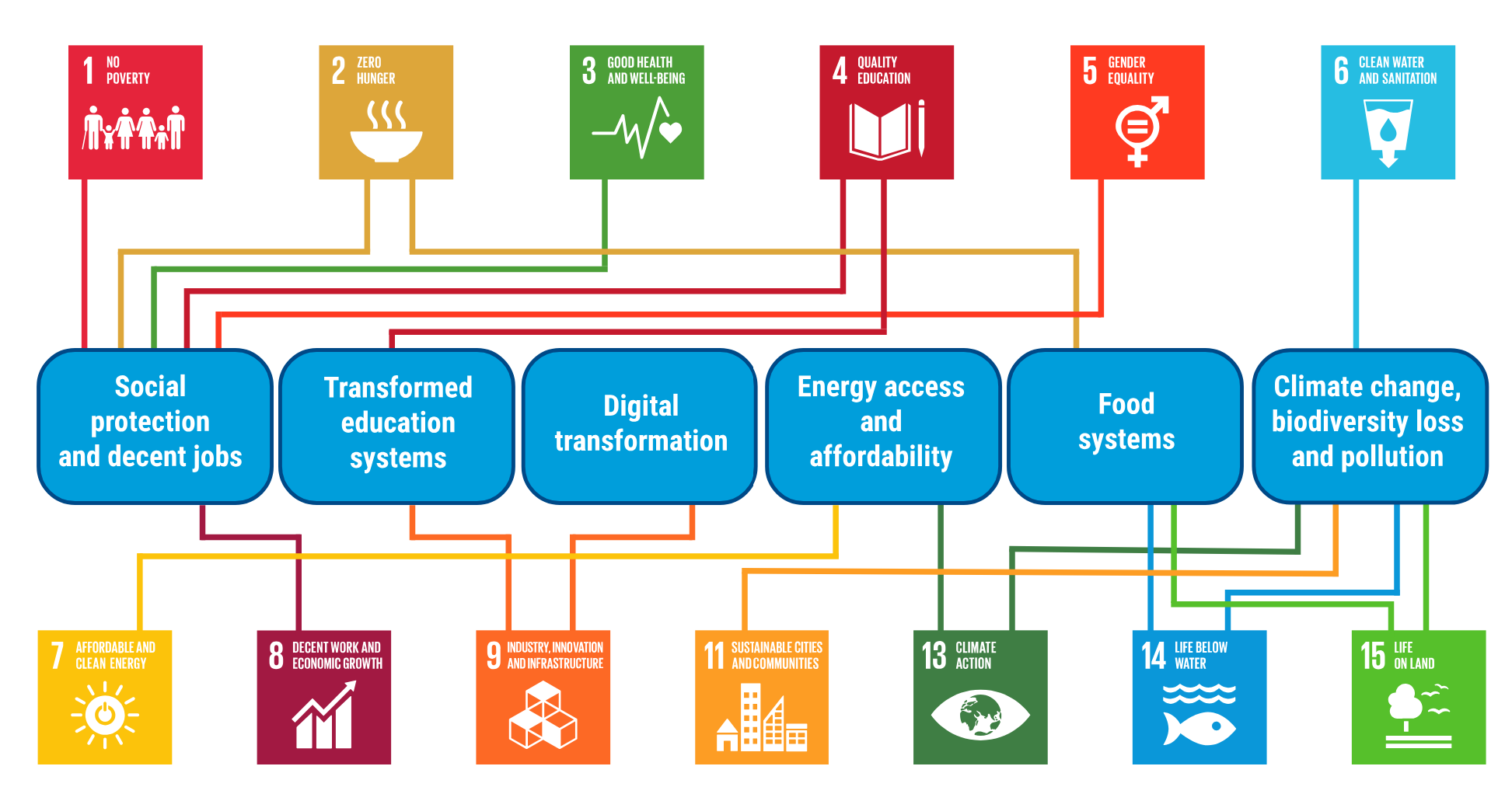
The Sustainable Development Goals Explained
The Sustainable Development Goals (SDGs) are a set of 17 global goals established by the United Nations in 2015 as part of the 2030 Agenda for Sustainable Development. These goals are designed to address various social, economic, and environmental challenges facing the world today.
Key Features of the SDGs:
- Comprehensive: The SDGs cover a wide range of issues, including poverty, inequality, climate change, peace and justice, and more.
- Universal: The goals apply to all countries, both developed and developing, recognising that sustainable development is a global responsibility.
- Interconnected: The goals are interconnected and aim to achieve a balance between economic growth, social inclusion, and environmental protection.
- Ambitious: The SDGs set ambitious targets to be achieved by 2030, pushing countries to take bold actions towards a more sustainable future.
The 17 Sustainable Development Goals:
- No Poverty
- Zero Hunger
- Good Health and Well-being
- Quality Education
- Gender Equality
- Clean Water and Sanitation
- Affordable and Clean Energy
- Decent Work and Economic Growth
- Industry, Innovation, and Infrastructure
- Reduced Inequality
Understanding the Benefits of SDGs: A Global Framework for Sustainable Progress
- Addresses a wide range of global challenges such as poverty, inequality, and climate change.
- Promotes universal responsibility by applying to all countries regardless of their development status.
- Recognises the interconnectedness of social, economic, and environmental issues in sustainable development.
- Sets ambitious targets to be achieved by 2030, driving action towards a more sustainable future.
- Encourages collaboration and partnership between governments, organisations, and individuals to achieve the goals.
- Provides a clear framework for measuring progress and monitoring impact on a global scale.
Challenges of the SDGs: Addressing Complexity, Resource Demands, and Global Inequality
- Complexity
- Resource Intensive
- Monitoring and Evaluation
- Policy Coherence
- Inequality Among Countries
- Political Will
- Climate Change Impact
Addresses a wide range of global challenges such as poverty, inequality, and climate change.
The Sustainable Development Goals (SDGs) offer a comprehensive framework that addresses a diverse array of pressing global issues, including poverty, inequality, and climate change. By encompassing such a wide range of challenges, the SDGs provide a holistic approach to sustainable development that recognises the interconnectedness of social, economic, and environmental concerns. This inclusive approach ensures that efforts towards achieving the SDGs have the potential to create meaningful and lasting impact on a global scale.
Promotes universal responsibility by applying to all countries regardless of their development status.
One of the key benefits of the Sustainable Development Goals (SDGs) is their promotion of universal responsibility by applying to all countries, irrespective of their development status. By recognising that sustainable development is a shared global endeavour, the SDGs encourage collaboration and collective action towards addressing common challenges. This inclusive approach fosters a sense of solidarity and mutual accountability among nations, emphasising the importance of working together to achieve a more equitable and sustainable future for all.
Recognises the interconnectedness of social, economic, and environmental issues in sustainable development.
The Sustainable Development Goals (SDGs) stand out for their recognition of the interconnectedness of social, economic, and environmental issues in sustainable development. By acknowledging that these aspects are intertwined and influence one another, the SDGs promote a holistic approach to addressing global challenges. This understanding underscores the importance of considering the broader impact of actions taken to achieve sustainable development, ensuring that progress in one area does not come at the expense of another.
Sets ambitious targets to be achieved by 2030, driving action towards a more sustainable future.
One of the key advantages of the Sustainable Development Goals (SDGs) is that they establish ambitious targets to be accomplished by 2030, encouraging proactive measures towards a more sustainable future. By setting clear and challenging objectives, the SDGs inspire governments, organisations, and individuals to take decisive actions that contribute to positive global change. This focus on achieving specific goals within a set timeframe fosters a sense of urgency and accountability, driving momentum towards building a more sustainable and equitable world for present and future generations.
Encourages collaboration and partnership between governments, organisations, and individuals to achieve the goals.
The Sustainable Development Goals (SDGs) serve as a catalyst for fostering collaboration and partnerships among governments, organisations, and individuals to collectively work towards achieving the set goals. By emphasising the importance of cooperation on a global scale, the SDGs encourage stakeholders from various sectors to unite their efforts, resources, and expertise in addressing complex challenges such as poverty, inequality, and climate change. This collaborative approach not only amplifies the impact of initiatives but also promotes shared responsibility in creating a more sustainable and inclusive world for present and future generations.
Provides a clear framework for measuring progress and monitoring impact on a global scale.
The Sustainable Development Goals (SDGs) offer a significant advantage by providing a clear framework for measuring progress and monitoring impact on a global scale. This structured approach enables countries, organisations, and individuals to track their efforts towards achieving the goals and assess the effectiveness of interventions. By establishing specific targets and indicators for each goal, the SDGs facilitate accountability and transparency in addressing global challenges, ultimately guiding actions that contribute to a more sustainable and equitable world for all.
Complexity
One significant drawback of the Sustainable Development Goals (SDGs) is their complexity. With a total of 17 goals and numerous targets, countries may find it difficult to navigate and prioritise their efforts effectively. The sheer breadth of issues covered by the SDGs can overwhelm policymakers and hinder the implementation of focused strategies. This complexity poses a challenge in allocating resources efficiently and may lead to a lack of clear direction in achieving the desired outcomes outlined in the goals. Addressing this con requires careful planning, coordination, and alignment of priorities to ensure that progress towards sustainable development is not impeded by the intricate nature of the SDGs.
Resource Intensive
Achieving the Sustainable Development Goals poses a significant challenge due to their resource-intensive nature. The implementation of the SDGs demands substantial financial investments, making it a daunting task for many countries, particularly those already grappling with economic hardships. The need for extensive resources to support sustainable development initiatives underscores the importance of global cooperation and innovative financing mechanisms to ensure that no country is left behind in the pursuit of a more equitable and sustainable future.
Monitoring and Evaluation
Monitoring and evaluating progress towards the Sustainable Development Goals (SDGs) poses a significant challenge due to data limitations and the diverse methodologies used. Ensuring accurate tracking of the impact of initiatives related to the SDGs requires reliable and comprehensive data, which may not always be readily available. Additionally, the varying approaches to monitoring and evaluation across different regions and sectors can make it challenging to compare progress effectively. Addressing these obstacles is crucial to effectively measuring the success of SDG-related efforts and making informed decisions for sustainable development.
Policy Coherence
Policy coherence is a significant challenge when it comes to implementing the Sustainable Development Goals (SDGs). Aligning national policies with the diverse range of SDGs can be a complex task, often resulting in potential conflicts or trade-offs between different goals. Balancing economic, social, and environmental priorities while ensuring that policies support all aspects of sustainable development requires careful consideration and strategic planning. Achieving policy coherence is crucial to effectively addressing the interconnected challenges outlined in the SDGs and maximising their impact on global development efforts.
Inequality Among Countries
Inequality Among Countries poses a significant challenge to the successful implementation of the Sustainable Development Goals (SDGs). The varying capacities of developed and developing nations to achieve these goals can exacerbate global disparities if not addressed effectively. Without targeted efforts to bridge this gap and ensure equitable progress, the risk of widening inequalities on a global scale looms large. It is crucial for international cooperation and support mechanisms to be strengthened to empower all countries, regardless of their economic status, in working towards a more sustainable and inclusive future for all.
Political Will
One significant challenge in achieving the Sustainable Development Goals (SDGs) is the issue of political will. The level of commitment from governments to fully implement the SDGs can vary greatly, resulting in inconsistent progress across different regions or sectors. Without strong and consistent political support, efforts to achieve the SDGs may be hindered, making it crucial for policymakers to prioritise sustainable development and work towards a unified approach to ensure progress towards a more equitable and sustainable future for all.
Climate Change Impact
Climate change presents a formidable challenge to the attainment of various Sustainable Development Goals (SDGs), necessitating immediate action that surpasses existing obligations. The adverse effects of climate change, such as extreme weather events, rising sea levels, and ecosystem degradation, not only exacerbate poverty and inequality but also jeopardize efforts towards achieving goals related to health, education, and sustainable cities. Addressing the impact of climate change demands comprehensive strategies and enhanced global cooperation to mitigate its consequences and ensure a more sustainable future for all.