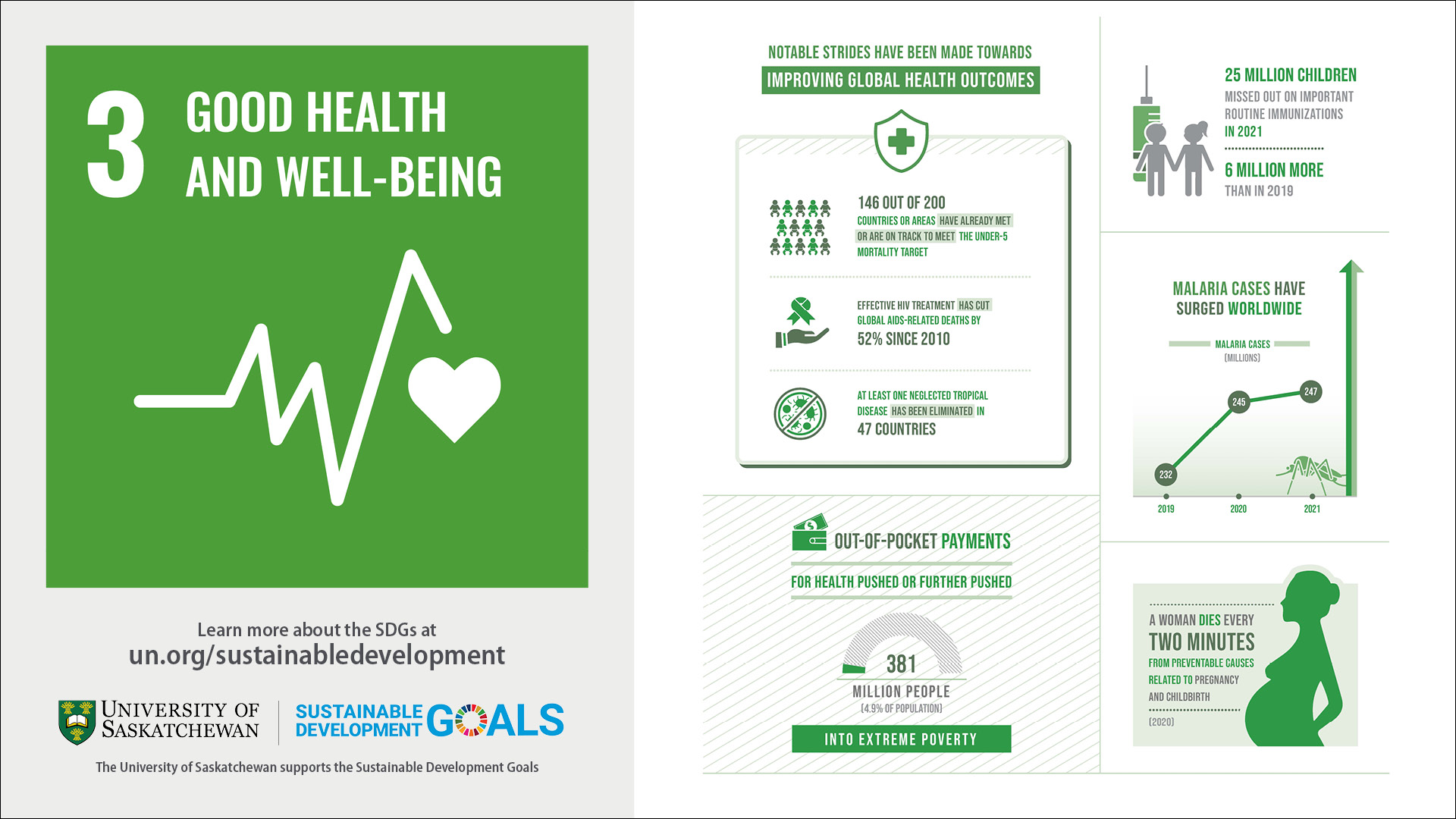
The Sustainable Development Goal 3: Good Health and Well-being
SDG 3 aims to ensure healthy lives and promote well-being for all at all ages. This goal encompasses a wide range of health-related targets and indicators that are crucial for achieving sustainable development.
Targets of SDG 3:
- Reduce the global maternal mortality ratio
- End preventable deaths of newborns and children under 5 years of age
- Combat communicable diseases such as HIV/AIDS, malaria, and tuberculosis
- Ensure universal access to sexual and reproductive healthcare services
- Achieve universal health coverage, including financial risk protection, access to quality essential healthcare services, and access to safe, effective, quality, and affordable essential medicines and vaccines for all
- Substantially reduce the number of deaths and illnesses from hazardous chemicals and air, water, and soil pollution and contamination
Indicators to Measure Progress:
- Mortality rate attributed to cardiovascular disease, cancer, diabetes or chronic respiratory disease
- Mortality rate attributed to unsafe water, unsafe sanitation or lack of hygiene
- Mortality rate attributed to household and ambient air pollution
- Proportion of population with large household expenditures on health as a share of total household expenditure or income
- Vaccination coverage among children under 1 year old
- Proportion of births attended by skilled health personnel
Monitoring these targets through the specified indicators is crucial for tracking progress towards achieving SDG 3. By focusing on good health and well-being for all individuals worldwide, we can create a more sustainable future for generations to come.
Key Benefits of SDG 3: Advancing Health and Well-being Through Targeted Goals and Indicators
- Promotes good health and well-being for all individuals
- Targets maternal mortality reduction to ensure safer childbirth
- Aims to prevent deaths of newborns and children under 5 years old
- Addresses communicable diseases like HIV/AIDS, malaria, and tuberculosis
- Advocates for universal access to sexual and reproductive healthcare services
- Strives for universal health coverage including financial risk protection
- Focuses on reducing deaths from hazardous chemicals and pollution
- Measures mortality rates from cardiovascular diseases, cancer, etc.
- Monitors vaccination coverage and skilled birth attendance
Challenges in Achieving SDG 3: Measuring Complexity, Resource Demands, Health Disparities, Data Accuracy, and Mental Health Focus
- Complexity in measuring and monitoring health indicators across diverse populations and regions.
- Resource-intensive nature of achieving universal healthcare coverage and access to essential medicines for all.
- Challenges in addressing the root causes of health disparities, such as socioeconomic factors and systemic inequalities.
- Potential for data inaccuracies and discrepancies in reporting health-related statistics.
- Limited focus on mental health issues within the SDG 3 targets, despite their significant impact on overall well-being.
Promotes good health and well-being for all individuals
One of the key advantages of SDG 3 targets and indicators is their focus on promoting good health and well-being for all individuals. By addressing issues such as maternal mortality, child mortality, communicable diseases, access to healthcare services, and environmental pollution, these targets aim to ensure that everyone has the opportunity to lead a healthy life. This proactive approach not only improves individual well-being but also contributes to building healthier communities and societies as a whole. Prioritising good health and well-being for all individuals is essential for achieving sustainable development and creating a more equitable world for future generations.
Targets maternal mortality reduction to ensure safer childbirth
One of the key benefits of SDG 3 targets and indicators is their focus on reducing maternal mortality to ensure safer childbirth. By prioritising this goal, the Sustainable Development Goal 3 aims to improve the health and well-being of mothers around the world, ultimately saving lives and promoting better outcomes for both mothers and their newborns. This proactive approach not only addresses a critical healthcare issue but also contributes to achieving sustainable development by safeguarding the health of women, who play a vital role in families and communities.
Aims to prevent deaths of newborns and children under 5 years old
One significant advantage of the Sustainable Development Goal 3 targets and indicators is its focus on preventing the deaths of newborns and children under 5 years old. By prioritising this goal, efforts are directed towards ensuring that every child has the opportunity to survive and thrive in their early years. Through specific indicators that track progress in reducing child mortality rates, such as vaccination coverage and skilled health personnel attendance at births, SDG 3 aims to create a world where preventable deaths among the most vulnerable members of society are minimised, ultimately contributing to healthier and more sustainable communities globally.
Addresses communicable diseases like HIV/AIDS, malaria, and tuberculosis
One significant advantage of SDG 3 targets and indicators is their focus on addressing communicable diseases such as HIV/AIDS, malaria, and tuberculosis. By targeting these specific health issues, the Sustainable Development Goal 3 aims to reduce the burden of these diseases globally, improve access to treatment and prevention measures, and ultimately enhance the overall well-being of populations affected by these conditions. This proactive approach not only saves lives but also contributes to building healthier and more resilient communities that are better equipped to tackle public health challenges effectively.
Advocates for universal access to sexual and reproductive healthcare services
One of the key benefits of SDG 3 targets and indicators is their advocacy for universal access to sexual and reproductive healthcare services. By prioritising this aspect of health, the Sustainable Development Goal promotes equality and empowerment, ensuring that individuals worldwide have the right to make informed decisions about their sexual and reproductive well-being. This proactive approach not only improves overall health outcomes but also contributes to gender equality, social justice, and sustainable development on a global scale.
Strives for universal health coverage including financial risk protection
One significant advantage of SDG 3 targets and indicators is their focus on striving for universal health coverage, which includes financial risk protection. By aiming to ensure that everyone has access to essential healthcare services without facing financial hardship, this aspect of the goal addresses a fundamental need for individuals worldwide. Achieving universal health coverage not only promotes equitable access to healthcare but also helps protect individuals and families from the burden of high healthcare costs, ultimately contributing to improved well-being and quality of life for all.
Focuses on reducing deaths from hazardous chemicals and pollution
One significant advantage of SDG 3 targets and indicators is their emphasis on reducing deaths caused by hazardous chemicals and pollution. By addressing the impact of environmental factors on health, this aspect of the goal highlights the importance of creating a cleaner and safer living environment for all individuals. Through targeted interventions and policies aimed at mitigating the effects of pollution, such as air, water, and soil contamination, SDG 3 contributes to improving overall well-being and reducing preventable illnesses and deaths related to environmental hazards. This proactive approach not only safeguards public health but also promotes sustainable development by ensuring a healthier future for generations to come.
Measures mortality rates from cardiovascular diseases, cancer, etc.
One significant advantage of the Sustainable Development Goal 3 targets and indicators is the focus on measuring mortality rates from major non-communicable diseases such as cardiovascular diseases, cancer, diabetes, and chronic respiratory diseases. By tracking and monitoring these mortality rates, policymakers and healthcare professionals can gain valuable insights into the prevalence and impact of these diseases on populations. This data-driven approach enables targeted interventions, resource allocation, and healthcare strategies to effectively reduce the burden of these illnesses, ultimately leading to improved health outcomes and well-being for individuals worldwide.
Monitors vaccination coverage and skilled birth attendance
One key advantage of SDG 3 targets and indicators is the focus on monitoring vaccination coverage and skilled birth attendance. By tracking these specific indicators, we can ensure that essential healthcare services are reaching those who need them most. Monitoring vaccination coverage helps prevent the spread of infectious diseases and protects vulnerable populations, contributing to overall public health. Similarly, tracking skilled birth attendance ensures that mothers receive proper care during childbirth, reducing maternal and infant mortality rates. These indicators play a vital role in promoting good health and well-being for all individuals, aligning with the Sustainable Development Goal’s aim to achieve universal access to quality healthcare services.
Complexity in measuring and monitoring health indicators across diverse populations and regions.
Measuring and monitoring health indicators across diverse populations and regions presents a significant challenge when striving to achieve SDG 3 targets. The complexity arises from the varying healthcare systems, socio-economic factors, cultural practices, and access to resources that influence health outcomes differently in different areas. Standardising data collection methods and ensuring accurate reporting becomes intricate when considering the unique needs and contexts of diverse populations. Addressing this con requires tailored approaches that account for the specific challenges faced by each region while maintaining a comprehensive view of global health progress under SDG 3.
Resource-intensive nature of achieving universal healthcare coverage and access to essential medicines for all.
One significant challenge associated with the Sustainable Development Goal 3 targets and indicators is the resource-intensive nature of achieving universal healthcare coverage and access to essential medicines for all. The goal of ensuring that every individual has access to quality healthcare services and essential medications requires substantial financial investments, infrastructure development, and human resources. Limited funding, inadequate healthcare facilities, and a shortage of trained medical professionals can hinder progress towards universal health coverage. Addressing this con necessitates strategic planning, innovative financing mechanisms, and international cooperation to overcome barriers and ensure that no one is left behind in accessing vital healthcare services.
Challenges in addressing the root causes of health disparities, such as socioeconomic factors and systemic inequalities.
Addressing the root causes of health disparities, such as socioeconomic factors and systemic inequalities, poses a significant challenge in achieving SDG 3 targets. These disparities are deeply entrenched in society and require comprehensive strategies that go beyond traditional healthcare interventions. Socioeconomic factors like poverty, lack of education, and unequal access to resources directly impact health outcomes and create barriers to achieving good health and well-being for all. Systemic inequalities, including discrimination based on race, gender, or ethnicity, further exacerbate these disparities. Tackling these complex issues demands a multi-faceted approach that addresses structural barriers and promotes equity in healthcare access and delivery.
Potential for data inaccuracies and discrepancies in reporting health-related statistics.
One significant con of SDG 3 targets and indicators is the potential for data inaccuracies and discrepancies in reporting health-related statistics. Due to varying data collection methods, reporting standards, and healthcare infrastructure across different regions and countries, there is a risk of unreliable or incomplete data being reported. This can lead to misleading assessments of progress towards achieving the health-related targets set out by SDG 3. Addressing these challenges requires improved data collection mechanisms, enhanced transparency in reporting practices, and greater collaboration among stakeholders to ensure the accuracy and consistency of health-related statistics globally.
Limited focus on mental health issues within the SDG 3 targets, despite their significant impact on overall well-being.
One notable con of the SDG 3 targets and indicators is the limited focus on mental health issues. Despite their profound impact on overall well-being, mental health concerns are not adequately prioritised within the framework of SDG 3. The absence of specific targets and indicators related to mental health overlooks a critical aspect of human health and fails to address the significant challenges faced by individuals dealing with mental health issues. By neglecting this crucial area, the SDG 3 framework may fall short in achieving its goal of ensuring good health and well-being for all at all ages.