SDG 3: Good Health and Well-being
Sustainable Development Goal 3 (SDG 3) is one of the United Nations’ 17 Global Goals for a fairer, safer and more sustainable world. Its central aim is to ensure healthy lives and promote well-being for all, at all ages. This means more than treating illness: it includes preventing disease, making healthcare accessible and affordable, and supporting people’s physical and mental well-being throughout their lives.
What does SDG 3 aim to achieve?
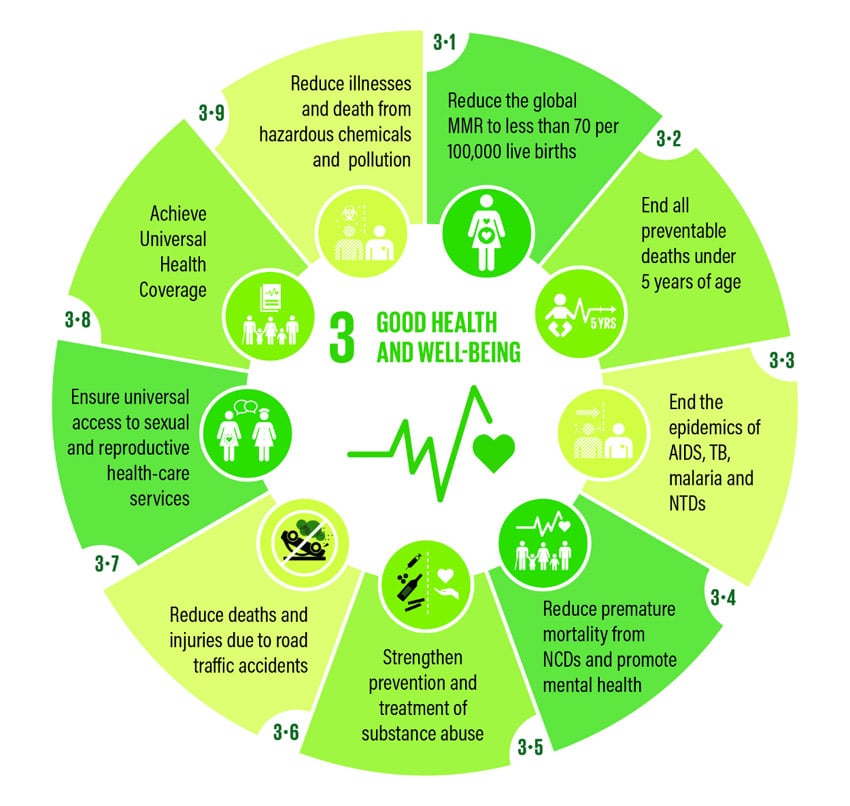
SDG 3 includes targets covering a wide range of health issues. Together, they address preventable deaths, access to care and the conditions that affect people’s health.
- Improve maternal health: reduce the global maternal mortality ratio to fewer than 70 deaths per 100,000 live births.
- End preventable deaths among children: reduce newborn deaths to no more than 12 per 1,000 live births and deaths among children under five to no more than 25 per 1,000.
- Combat infectious diseases: end the epidemics of AIDS, tuberculosis, malaria and neglected tropical diseases, and tackle hepatitis and water-borne diseases.
- Reduce deaths from non-communicable diseases: cut premature deaths from conditions such as cancer, diabetes and heart disease, while promoting mental health and well-being.
- Prevent and treat substance misuse: strengthen efforts to prevent and treat harmful use of drugs and alcohol.
- Improve road safety: reduce deaths and injuries from road traffic accidents. The original target set 2020 as the deadline, underlining the need for continued action.
- Support sexual and reproductive health: ensure access to sexual and reproductive healthcare, information, education and family planning services.
- Achieve universal health coverage: give everyone access to essential health services, medicines and vaccines without causing financial hardship.
- Reduce illness from pollution: lower the number of deaths and illnesses caused by hazardous chemicals and air, water and soil pollution.
- Strengthen tobacco control: put the World Health Organization Framework Convention on Tobacco Control into effect.
- Support medical research and access to medicines: encourage research into vaccines and medicines, particularly for diseases that affect lower-income countries, and improve access to affordable essential treatments.
- Build and support the health workforce: increase investment in health services and the recruitment, training and retention of health workers.
- Prepare for health emergencies: strengthen early-warning systems and the ability of countries to prevent, manage and respond to health risks.
Why is SDG 3 important?
Good health is both a basic human need and a foundation for people to learn, work and participate in their communities. When preventable illnesses go untreated or healthcare is unaffordable, families can face financial hardship and children may miss out on education. Strong health systems also help communities respond to outbreaks, natural disasters and other emergencies.
Health is shaped by more than medical care. Clean air and water, safe housing, nutritious food, education, secure employment and supportive relationships all influence people’s well-being. Progress on SDG 3 is therefore closely connected to progress on other goals, including those focused on poverty, food security, clean water, education and equality.
Challenges to progress
Progress towards SDG 3 is uneven. Many people still lack access to essential healthcare, and preventable deaths remain a serious concern in some parts of the world. Health services can be affected by shortages of trained staff, inadequate funding, conflict, poverty and weak infrastructure. The COVID-19 pandemic also exposed how quickly health emergencies can disrupt routine care and widen existing inequalities.
Non-communicable diseases, mental health conditions, antimicrobial resistance and pollution continue to place pressure on individuals and health systems. In addition, the cost of healthcare can stop people from seeking help or force households into financial difficulty. Meeting SDG 3 requires sustained investment, effective public health policies and services that are accessible to everyone, including people who are often underserved.
How can progress be supported?
Governments have a central role in funding health services, training health workers, improving access to medicines and vaccines, and addressing the social and environmental causes of ill health. Communities and organisations can also contribute by sharing reliable health information, supporting prevention programmes and making services more inclusive.
Individuals can help by following trusted health advice, supporting road and workplace safety, taking part in appropriate screening and vaccination programmes, and treating mental health as an important part of overall well-being. These actions cannot replace strong public services, but they can contribute to healthier and more resilient communities.
A shared goal
SDG 3 is an ambitious commitment to make good health and well-being a reality for everyone, not a privilege for a few. Achieving it calls for action across healthcare, education, public policy and the wider conditions in which people live. By working towards healthier lives at every age, societies can create stronger communities and a more sustainable future.
8 Essential Tips for Promoting Health and Wellbeing in Line with SDG 3 Goals
- Eat a balanced diet with plenty of fruit and vegetables.
- Stay active with regular exercise.
- Keep vaccinations up to date.
- Look after your mental health and seek support when needed.
- Avoid smoking and limit alcohol.
- Wash your hands to help prevent infections.
- Attend health checks and screenings.
- Support safe roads and clean air in your community.
Eat a balanced diet with plenty of fruit and vegetables.
Eating a balanced diet is a simple way to support SDG 3, which aims to ensure good health and well-being for everyone. Include plenty of fruit and vegetables in your meals, alongside other nutritious foods, to provide the vitamins, minerals and fibre your body needs. Choosing a varied diet can support overall health and help build healthy habits for life.
Stay active with regular exercise.
Staying active through regular exercise is a simple way to support SDG 3: Good Health and Well-being. Physical activity can improve heart health, strengthen muscles and bones, boost mood and reduce the risk of some long-term illnesses. Choose activities you enjoy, such as walking, cycling, dancing or gardening, and build them into your routine. Start at a comfortable pace and follow trusted health advice, especially if you have a medical condition or have not exercised for some time.
Keep vaccinations up to date.
Keeping vaccinations up to date is a simple but important way to support SDG 3: Good Health and Well-being. Vaccines help protect individuals from serious, preventable diseases and reduce the chance of infections spreading through families and communities. Follow the vaccination advice provided by your local health service, check whether you or your children are due any routine or booster doses, and speak to a healthcare professional if you have questions.
Look after your mental health and seek support when needed.
Looking after your mental health is an important part of achieving SDG 3: Good Health and Well-being. Make time for rest, connection and activities that help you feel well, and remember that asking for support is a positive step, not a sign of weakness. If you are struggling, speak to someone you trust or contact a qualified health professional or support service.
Avoid smoking and limit alcohol.
Avoid smoking and limit alcohol to help protect your health and support SDG 3: Good Health and Well-being. Smoking increases the risk of serious illnesses, including heart disease, stroke and cancer, while drinking too much alcohol can harm your physical and mental health. Avoiding tobacco and choosing to drink less—or not at all—can reduce these risks and contribute to healthier lives at every age.
Wash your hands to help prevent infections.
Washing your hands regularly with soap and clean water is a simple way to help prevent the spread of infections and support good health. Wash them thoroughly, especially before preparing or eating food, after using the toilet, and after coughing, sneezing or being outdoors. This small habit helps protect you and those around you, contributing to SDG 3’s goal of promoting healthy lives and well-being for all.
Attend health checks and screenings.
Attend routine health checks and recommended screenings, even when you feel well. They can help identify health concerns early, when treatment may be more effective, and give you a chance to discuss any questions with a health professional. The right checks depend on your age, health and personal circumstances, so ask your GP or local health service which screenings are appropriate for you. Looking after your health in this way supports SDG 3’s aim of promoting good health and well-being for all.
Support safe roads and clean air in your community.
Support safe roads and clean air in your community by choosing to walk, cycle or use public transport where possible, and by encouraging safer speed limits, crossings and cycle routes. You can also support local efforts to reduce traffic pollution, improve green spaces and monitor air quality. These practical steps can help prevent road injuries, reduce exposure to harmful pollution and make neighbourhoods healthier for everyone.