SDG 12.5: Reducing Waste Through Prevention, Reuse and Recycling
Sustainable Development Goal (SDG) 12 calls for responsible consumption and production. Its target 12.5 sets a clear ambition: by 2030, substantially reduce waste generation through prevention, reduction, recycling and reuse.
Waste is not only what ends up in a bin or landfill. It also represents materials, energy and resources that have been used to make products and then discarded. Preventing waste in the first place can therefore reduce pressure on natural resources, cut pollution and help limit greenhouse gas emissions.
What does SDG 12.5 mean?
SDG 12.5 focuses on four connected approaches:
- Prevention: avoiding unnecessary products and packaging, and designing goods to last.
- Reduction: using fewer materials and creating less waste during production and consumption.
- Reuse: repairing, sharing, refilling or repurposing items instead of throwing them away.
- Recycling: collecting and processing discarded materials so they can be made into new products.
These approaches are most effective when considered in that order. Recycling is valuable, but it usually requires energy and infrastructure. Preventing waste and keeping products in use for longer can avoid the need to process or replace them at all.
Why waste reduction matters
Growing populations and consumption can increase the amount of waste produced, while many products are designed for short-term use. When waste is poorly managed, it can pollute land and water, harm wildlife and affect people’s health. Discarded food is another major concern: producing food that is never eaten uses land, water, energy and labour unnecessarily.
Reducing waste can also bring practical benefits. Businesses may save money by using materials more efficiently, while repair and reuse can make goods more affordable and create local services and jobs. For households, planning purchases, maintaining belongings and avoiding food waste can reduce everyday costs.
How governments and businesses can help
Meeting SDG 12.5 requires action across the whole life cycle of products, from design and manufacture to use and disposal. Governments can support progress through waste-prevention plans, clear recycling systems, public procurement policies and rules that encourage durable, repairable products.
Businesses can examine where materials are lost, reduce excess packaging and design products that are easier to repair, reuse or recycle. They can also offer services such as refill schemes, take-back programmes and spare parts. Accurate information about the materials and life span of products helps customers make informed choices.
Reliable waste collection and sorting are essential, too. Recycling systems need to be accessible and easy to understand, with facilities that can handle the materials people are asked to separate. Reuse and repair services need similar support if they are to become convenient alternatives to buying new products.
What individuals can do
Individual choices cannot replace action by governments and businesses, but they can contribute to change and help build demand for better systems. People can:
- buy only what they need and choose durable products where possible;
- repair, share, borrow or buy second-hand items;
- plan meals, store food well and use leftovers to prevent food waste;
- choose reusable options instead of disposable products;
- sort waste according to local recycling guidance; and
- support organisations and businesses that reduce waste and make reuse practical.
Measuring progress
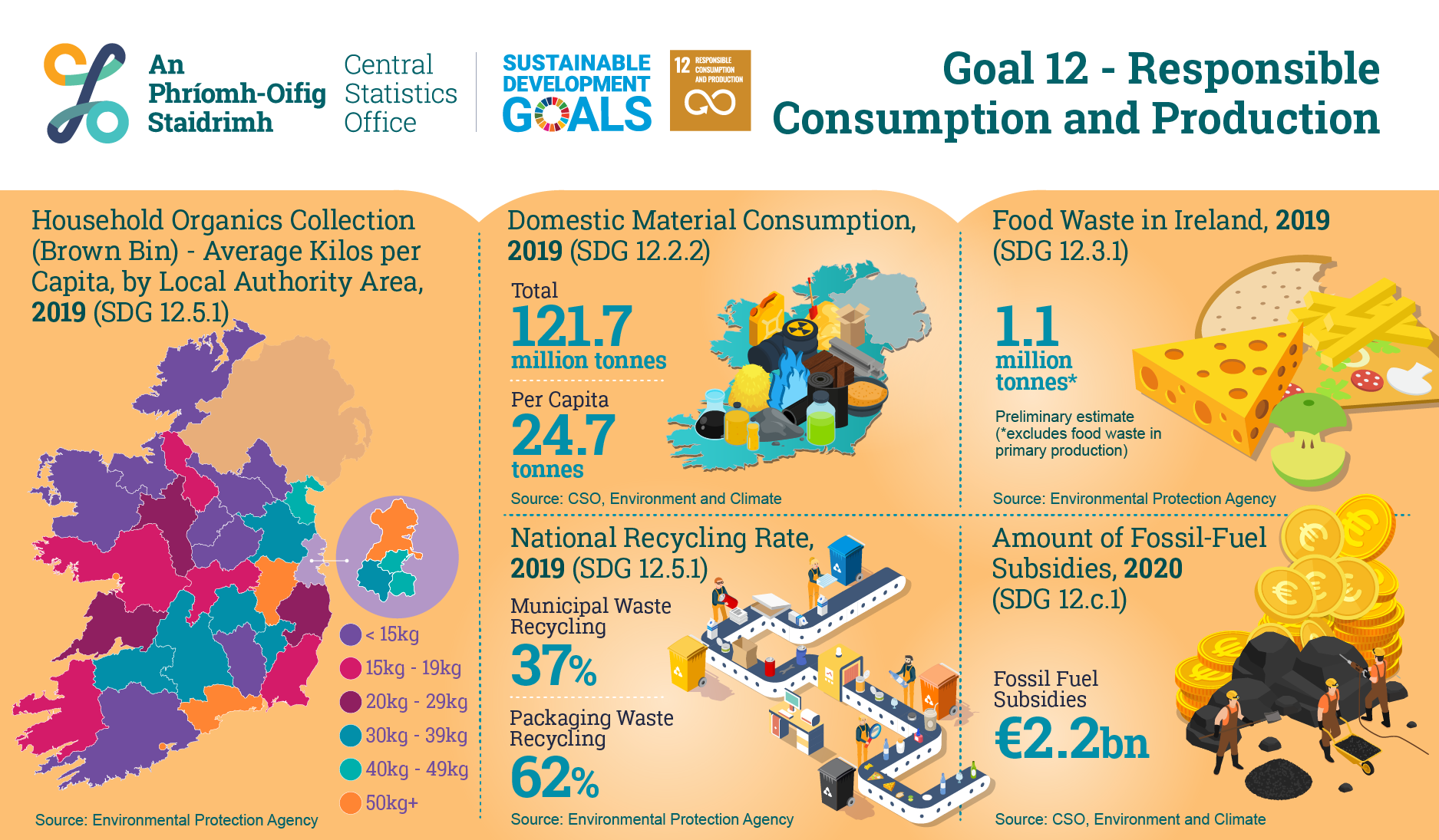
Progress towards SDG 12.5 is tracked internationally using indicators that include the national recycling rate and the amount of waste recycled. These figures are useful, but they do not tell the whole story. A high recycling rate does not necessarily mean that less waste is being generated overall.
Measuring prevention and reuse can be more difficult, because data is not always collected consistently. Governments, businesses and communities need transparent reporting that looks beyond recycling to the total amount of waste produced, the materials used and whether products remain in use for longer.
A shared responsibility
SDG 12.5 is about changing the systems that make waste routine. Better product design, responsible production, convenient reuse and repair, and effective recycling all have a role to play. The greatest gains come when these efforts work together and prevention is treated as the first priority.
By reducing the resources we use and keeping products and materials in circulation for longer, societies can move towards more sustainable patterns of consumption and production—and make progress towards the 2030 Agenda for Sustainable Development.
Advancing Sustainable Development: The Benefits of SDG 12.5 in Waste Reduction and Resource Efficiency
- Reduces waste sent to landfill.
- Conserves natural resources.
- Cuts pollution and emissions.
- Encourages reuse and repair.
- Supports more efficient businesses.
- Promotes a circular economy.
Challenges in Achieving SDG 12.5: Addressing the Complexities of Recycling and Waste Management
- Recycling systems can be costly to establish and maintain.
- Waste data may be incomplete or inconsistent.
- Recycling alone does not prevent overconsumption.
- Some materials are difficult or impossible to recycle.
- Reuse and repair options may be inconvenient or unavailable.
- Businesses may face higher costs when redesigning products.
- Progress can be slow without strong policies and enforcement.
Reduces waste sent to landfill.
One important benefit of SDG 12.5 is that it helps reduce the amount of waste sent to landfill. Preventing waste, reusing items and recycling materials means fewer discarded products need to be buried, helping to conserve land and reduce pollution. It can also limit the release of greenhouse gases from landfill sites, particularly when food and other organic waste decompose.
Conserves natural resources.
One important benefit of SDG 12.5 is that it helps conserve natural resources. Preventing waste, reusing products and recycling materials reduces the need to extract fresh raw materials such as timber, metals and minerals. This can protect habitats, save water and energy, and lessen the environmental impact of producing new goods. By keeping resources in use for longer, communities and businesses can support more sustainable patterns of consumption and production.
Cuts pollution and emissions.
SDG 12.5 helps cut pollution and greenhouse gas emissions by reducing the amount of waste sent to landfill or incineration and limiting the need to extract, process and transport new materials. Preventing waste, reusing products and recycling resources can conserve energy and reduce harmful pollution in the air, soil and water, supporting cleaner and healthier communities.
Encourages reuse and repair.
SDG 12.5 encourages people and businesses to reuse and repair products rather than discard them. Keeping items in use for longer reduces waste and the demand for new materials, while repair services, sharing schemes and second-hand markets can also save money and support local jobs.
Supports more efficient businesses.
SDG 12.5 can help businesses operate more efficiently by encouraging them to prevent waste, use materials more carefully and make better use of resources. Reducing excess packaging, production offcuts and unsold stock can lower costs, while repairing, reusing and recycling materials can reduce reliance on new resources. These changes can also improve processes and help businesses build more resilient operations.
Promotes a circular economy.
SDG 12.5 promotes a circular economy by encouraging products and materials to be reused, repaired and recycled rather than discarded after a single use. This helps keep valuable resources in circulation for longer, reduces the need for raw materials and can lower the amount of waste sent to landfill. By supporting more sustainable design and business practices, it can also create opportunities for repair, reuse and recycling services.
Recycling systems can be costly to establish and maintain.
One challenge of SDG 12.5 is the cost of establishing and maintaining effective recycling systems. Local authorities may need to invest in collection vehicles, sorting facilities, processing equipment and public information campaigns, as well as pay ongoing operating costs. These expenses can be especially difficult for communities with limited budgets or low population densities, where recycling services may be more complex and costly to provide. Without reliable long-term funding and suitable infrastructure, recycling schemes may struggle to operate efficiently or achieve their intended environmental benefits.
Waste data may be incomplete or inconsistent.
A key challenge in measuring progress towards SDG 12.5 is that waste data may be incomplete or inconsistent. Countries and organisations can use different definitions, collection methods and reporting periods, making comparisons difficult. Informal recycling and reuse may also go unrecorded, while gaps in data can hide how much waste is actually produced or recycled. This makes it harder to identify where action is most needed and to judge whether waste-reduction policies are working.
Recycling alone does not prevent overconsumption.
Recycling is important, but it cannot solve the problem of overconsumption on its own. It deals with materials after products have been used, and recycling itself requires energy, water and infrastructure; some materials also lose quality or cannot be recycled repeatedly. If people and businesses continue to make, buy and discard more goods, recycling may simply manage part of the resulting waste rather than reduce it at source. SDG 12.5 therefore needs to prioritise preventing waste, making products last longer, and promoting repair, reuse and more mindful consumption alongside effective recycling.
Some materials are difficult or impossible to recycle.
One challenge of SDG 12.5 is that some materials are difficult—or even impossible—to recycle using existing technologies and facilities. Products made from mixed materials, certain plastics and items contaminated with food or chemicals may be rejected by recycling systems or end up being incinerated or sent to landfill. This can make recycling confusing for consumers and limit the impact of waste-reduction efforts. Better product design, clearer labelling and investment in recycling technology can help, but preventing waste and choosing reusable alternatives remain important where recycling is not practical.
Reuse and repair options may be inconvenient or unavailable.
Reuse and repair can help reduce waste, but these options are not always convenient or accessible. Repair services may be difficult to find, costly or far away, while spare parts and practical guidance may be unavailable. Reusable products can also require extra time, storage or access to refill and return schemes. As a result, people may choose to replace items rather than repair or reuse them, particularly when buying new is cheaper or easier. Making these options affordable, accessible and straightforward is therefore essential to achieving SDG 12.5.
Businesses may face higher costs when redesigning products.
Businesses may face higher costs when redesigning products to make them more durable, repairable or recyclable. Changes to materials, manufacturing processes and packaging can require investment in research, equipment and staff training, while smaller businesses may have fewer resources to absorb these expenses. Although redesign can bring long-term savings and environmental benefits, the initial costs may be challenging, particularly if customers are unwilling to pay more or suitable recycling and repair systems are not yet available.
Progress can be slow without strong policies and enforcement.
Progress towards SDG 12.5 can be slow when governments lack strong waste-reduction policies or fail to enforce existing rules. Without clear targets, effective monitoring and meaningful penalties for non-compliance, businesses and individuals may have little incentive to prevent waste, reuse materials or improve recycling. This can leave good intentions without lasting impact and make it harder to achieve substantial reductions by 2030.