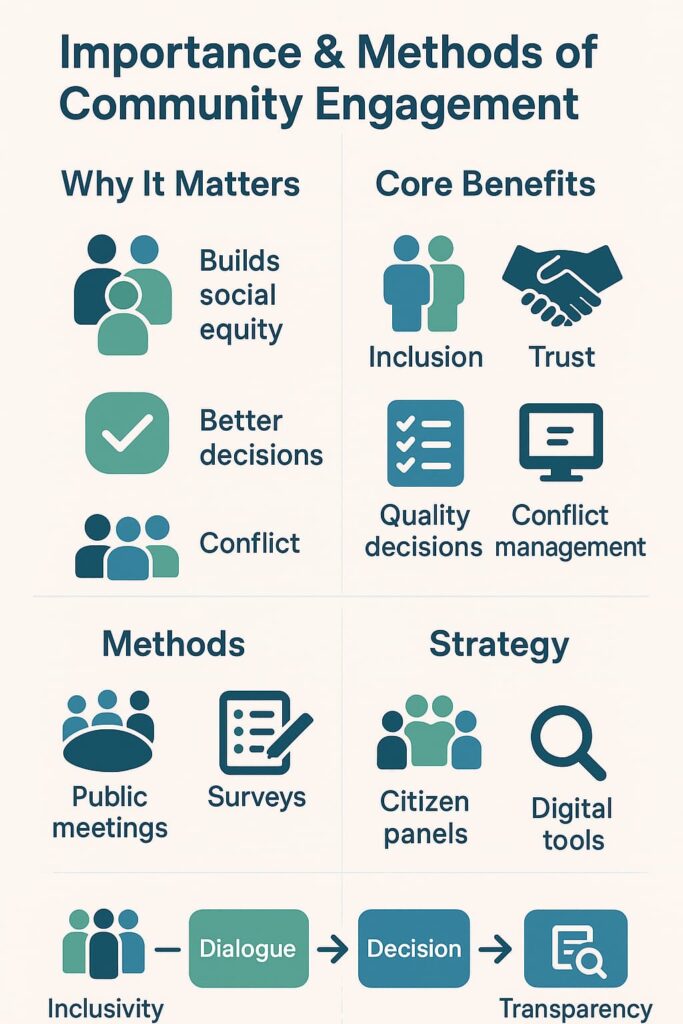
The Importance of Community Engagement
Communities are shaped by the people who live, work and spend time in them. When residents have a meaningful say in decisions that affect their neighbourhood, plans are more likely to reflect local needs and create lasting benefits. This is the value of community engagement: bringing people into conversations and decisions about the places they share.
Making better-informed decisions
Residents have first-hand knowledge of their area. They know which streets feel unsafe, where public spaces are well used, what local services are missing and how changes might affect everyday life. Listening to these experiences can help organisations identify issues that may not be apparent from plans, data or short visits alone.
Engagement does not mean every suggestion can be adopted. It does mean that local knowledge is considered alongside professional expertise, and that decisions are better informed as a result.
Building trust and a sense of belonging
People are more likely to trust a process when they can see how decisions are made and understand how their contributions have been considered. Clear communication, honest explanations and updates after consultation all help build that trust.
Being invited to contribute can also strengthen people’s connection to their neighbourhood. When residents feel that their views matter, they may feel a greater sense of ownership and responsibility for local spaces and shared projects.
Including a wider range of voices
Communities are diverse, and people can experience the same place in very different ways. A process that relies on a single public meeting or online survey may miss those who face barriers to taking part. These can include limited time, language differences, disability, caring responsibilities or lack of internet access.
Good engagement offers different ways to participate, such as accessible meetings, conversations in familiar local venues, translated information and online options. It also makes a deliberate effort to hear from groups whose perspectives are often under-represented.
Supporting stronger, more lasting projects
Projects developed with community input are more likely to address real priorities and work well in practice. Early engagement can help identify concerns before plans are finalised, reducing misunderstandings and making it easier to find workable solutions.
Community involvement can also continue beyond the planning stage. Residents may help shape, use or care for a project over time, helping it remain relevant as local needs change.
Making engagement meaningful
Effective community engagement is more than asking people for feedback after the important decisions have already been made. It should begin early, explain what is open to change and provide enough information for people to respond. Organisers should also report back on what they heard, what changed as a result and why some suggestions could not be taken forward.
Above all, engagement is an ongoing relationship, not a one-off event. By listening consistently and acting transparently, organisations and communities can work together to create places that are more inclusive, responsive and liveable.
A shared effort
Community engagement takes time and care, but its benefits reach beyond individual projects. It can strengthen relationships, reveal local knowledge and help ensure that change serves the people who experience it every day. When communities have a genuine role in shaping their future, better decisions—and stronger neighbourhoods—can follow.
Understanding Community Engagement: Key Concepts and Its Importance
- What are the 5 C’s of community engagement?
- Why is it important to engage communities?
- What are the 3 C’s of community engagement?
- What are the 5 importances of community engagement?
What are the 5 C’s of community engagement?
There is no single universally agreed set of “5 Cs”, but a useful way to describe community engagement is through communication, consultation, collaboration, co-creation and commitment. This means sharing clear information, listening to people’s views, working together, involving residents in shaping solutions and following through on agreed actions. Together, these principles help make engagement inclusive, meaningful and capable of building trust.
Why is it important to engage communities?
Engaging communities is important because the people who live and work in an area understand its needs, strengths and challenges first-hand. Listening to their views helps shape better-informed decisions, identify potential concerns early and create services or projects that are more inclusive and relevant. Meaningful engagement can also build trust, strengthen a sense of belonging and encourage people to take an active role in shaping their community’s future.
What are the 3 C’s of community engagement?
The 3 Cs of community engagement are commonly described as communication, consultation and collaboration. Communication means sharing clear, timely information; consultation involves listening to people’s views and experiences; and collaboration means working together to shape decisions and take action. Together, these principles help make engagement more inclusive, trustworthy and responsive to a community’s needs.
What are the 5 importances of community engagement?
Community engagement is important for five key reasons: it helps make decisions better informed by local knowledge; builds trust through open communication; ensures a wider range of voices and needs are considered; gives people a stronger sense of ownership and belonging; and supports more effective, sustainable projects that are more likely to benefit the community over time.