Sustainable Development and the Brundtland Report
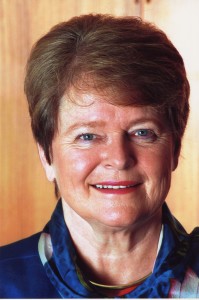
The idea of sustainable development is now central to discussions about climate change, economic growth and social wellbeing. Its most widely recognised definition comes from Our Common Future, a report published in 1987 by the World Commission on Environment and Development. The commission was chaired by Gro Harlem Brundtland, then Prime Minister of Norway, and the report is often known as the Brundtland Report.
What is sustainable development?
Our Common Future defines sustainable development as “development that meets the needs of the present without compromising the ability of future generations to meet their own needs”. The definition connects two important ideas: meeting people’s needs today, particularly the needs of those living in poverty, and recognising the limits that environmental systems and available technology place on what can be sustained over time.
This means sustainable development is not simply about protecting nature, nor is it a call to stop all economic activity. It asks how societies can improve people’s lives while using resources responsibly and safeguarding the natural systems on which present and future generations depend.
Why was the Brundtland Report important?
Before the report, environmental protection and economic development were often treated as competing priorities. The Brundtland Commission argued that they are closely connected. Poverty can contribute to environmental damage, while pollution, resource depletion and climate impacts can deepen poverty and undermine health and livelihoods. Long-term development therefore depends on taking social, economic and environmental concerns into account together.
The report helped bring sustainable development into international policy discussions. It also influenced the 1992 United Nations Conference on Environment and Development in Rio de Janeiro, where governments adopted Agenda 21 and agreed the Rio Declaration on Environment and Development.
The main principles
The Brundtland approach is often explained through three closely linked dimensions:
- Environmental responsibility: protecting ecosystems, reducing pollution and using natural resources at a rate that does not undermine their long-term availability.
- Social wellbeing: addressing poverty and inequality, and supporting access to essentials such as health, education, housing and meaningful participation in decision-making.
- Economic development: creating livelihoods and prosperity in ways that can endure, rather than relying on practices that transfer costs to communities, the environment or future generations.
These dimensions are interconnected rather than separate boxes to tick. For example, investment in public transport can improve access to jobs, reduce household transport costs and lower air pollution. The overall impact depends on how projects are planned, who benefits and what environmental costs they create.
Intergenerational and global responsibility
A distinctive feature of the Brundtland definition is its focus on fairness across generations. Decisions made today can affect the climate, biodiversity, natural resources and public finances inherited by people in the future. Sustainable development therefore calls for decision-makers to consider long-term consequences, not only immediate benefits.
The report also emphasises fairness within the present generation. Its concern with “needs” draws attention to people who lack basic services and opportunities. Sustainability is not achieved if environmental improvements are secured while the costs fall disproportionately on poorer communities, or if economic gains reach only a small part of society.
How the idea is applied today
The Brundtland concept can be used to assess policies and projects in fields such as energy, housing, agriculture, transport and urban planning. In practice, this can involve asking questions such as:
- Does the proposal meet genuine needs and improve quality of life?
- Who benefits, and who bears the costs or risks?
- Will it reduce pressure on ecosystems and natural resources?
- Are its benefits likely to last, and could it limit the choices available to future generations?
The United Nations Sustainable Development Goals, adopted in 2015, provide a broad framework for putting these connected priorities into practice. They cover issues including poverty, health, education, clean energy, responsible consumption, climate action and biodiversity.
Challenges and criticism
The Brundtland definition is influential partly because it is broad enough to apply in many contexts. That breadth can also make it difficult to interpret. Governments, businesses and communities may disagree about what counts as a “need”, how environmental limits should be measured, or how the costs of change should be shared.
There is also debate about whether continued economic growth can be made sustainable, especially in high-consuming societies. Technological improvements and efficiency can reduce some impacts, but they do not automatically prevent total resource use and emissions from rising. Effective action may require changes in production, consumption and infrastructure, alongside innovation and economic opportunity.
A lasting framework
Nearly four decades after its publication, the Brundtland Report remains a useful starting point for thinking about sustainable development. Its central message is that lasting prosperity cannot be separated from human wellbeing, fairness and the health of the natural world. Putting that message into practice requires careful choices, accountable institutions and cooperation across communities, countries and generations.
Understanding the Brundtland Report: Key Questions on Sustainable Development and Its Pillars
- What are the 5 pillars of sustainable development?
- Why is it called the Brundtland Report?
- What are the 5 C’s of sustainable development?
- Who is Brundtland in the field of sustainable development?
- What are the three pillars of the Brundtland report?
- What are the three pillars of sustainability according to the Brundtland Report?
What are the 5 pillars of sustainable development?
The five pillars commonly associated with sustainable development are people, planet, prosperity, peace and partnerships. They form the framework of the UN’s 2030 Agenda for Sustainable Development: improving lives and reducing poverty, protecting the environment, supporting inclusive economic wellbeing, fostering peaceful and just societies, and encouraging international cooperation. These five pillars build on the Brundtland Report’s vision, although the report itself is more commonly linked to the three interconnected dimensions of sustainable development: social, environmental and economic.
Why is it called the Brundtland Report?
It is called the Brundtland Report because it was led by Gro Harlem Brundtland, the Norwegian politician who chaired the World Commission on Environment and Development. Published in 1987 under the title Our Common Future, the report became widely known by her name.
What are the 5 C’s of sustainable development?
There is no universally agreed set of “5 C’s” in the Brundtland Report, which defines sustainable development as meeting present needs without compromising the ability of future generations to meet theirs. The phrase is used in different ways, but a common interpretation groups the ideas as conservation, community, culture, commerce and collaboration: protecting natural resources, supporting local people, respecting cultural identity, creating viable livelihoods and working together. These can be useful prompts for planning, but they are a later shorthand rather than an official Brundtland framework.
Who is Brundtland in the field of sustainable development?
Gro Harlem Brundtland is a Norwegian politician and former Prime Minister who chaired the United Nations World Commission on Environment and Development. The commission’s 1987 report, Our Common Future, became known as the Brundtland Report and helped popularise the definition of sustainable development as meeting the needs of the present without compromising the ability of future generations to meet their own needs.
What are the three pillars of the Brundtland report?
The three commonly recognised pillars of sustainable development are environmental protection, social equity and economic development. The Brundtland Report did not set them out as a formal three-pillar model, but its definition brings these concerns together: development should meet people’s needs today, especially those of the poorest, while protecting the environment and preserving future generations’ ability to meet their own needs.
What are the three pillars of sustainability according to the Brundtland Report?
The Brundtland Report is commonly associated with three pillars of sustainability: environmental protection, social equity and economic development. Although it did not set them out as a formal three-pillar framework, it emphasised that lasting development must balance these connected priorities—protecting the natural environment, meeting people’s needs fairly and supporting economic wellbeing—without compromising future generations’ ability to meet their own needs.