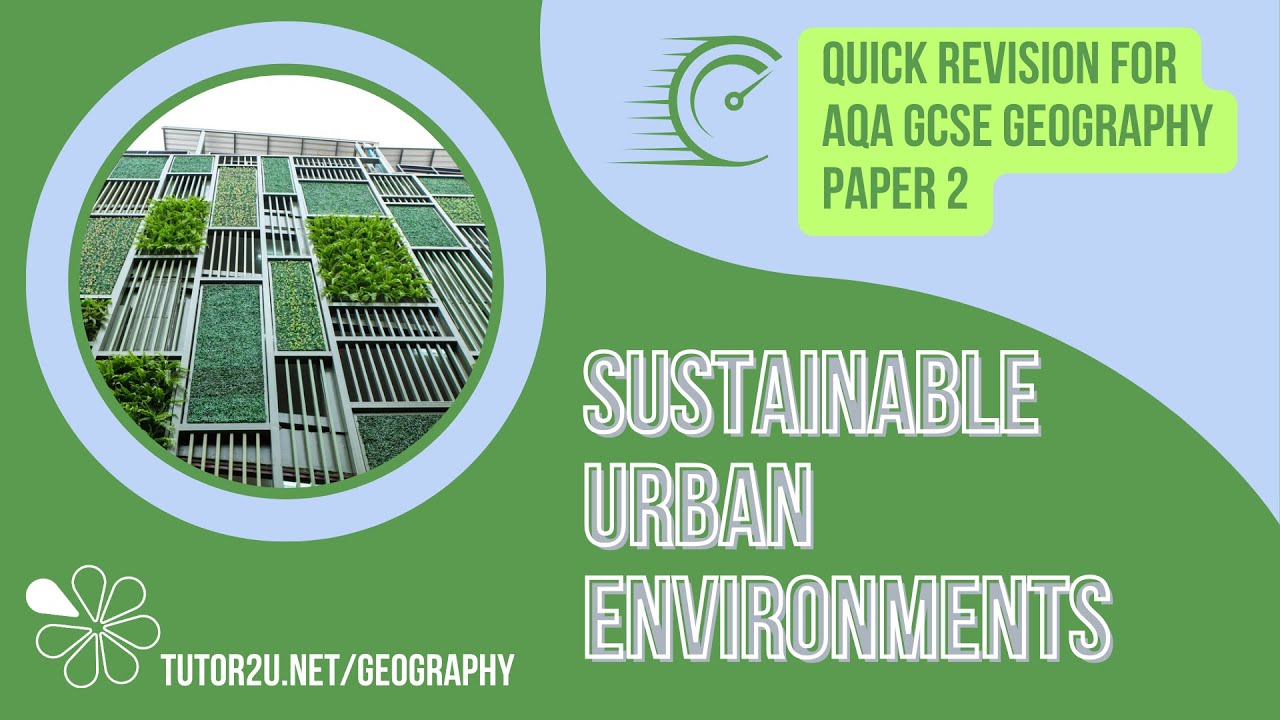
What Is Urban Sustainability? GCSE Geography Explained
Urban sustainability is the idea of making cities and towns better places to live, both now and in the future. A sustainable city meets people’s needs today without reducing the ability of future generations to meet their own needs. This means managing resources carefully, reducing environmental damage and creating healthy, inclusive communities.
The three parts of urban sustainability
At GCSE level, urban sustainability is often explained through three connected areas:
- Environmental sustainability: protecting the natural environment and using resources such as energy, water and land responsibly.
- Social sustainability: supporting people’s health, safety and quality of life, and ensuring they can access housing, education, healthcare and other services.
- Economic sustainability: creating reliable jobs and businesses without exhausting resources or causing lasting harm to the environment.
These areas are linked. For example, reliable public transport can reduce air pollution, help people reach work and services, and support local businesses.
How can cities become more sustainable?
There is no single solution. Cities often combine different approaches to reduce their environmental impact and improve residents’ lives.
Sustainable transport
Better public transport, cycle routes and safe walking paths can reduce the number of car journeys. This may cut traffic congestion, air pollution and greenhouse gas emissions. However, transport improvements need to be affordable and accessible to people across the city.
Energy-efficient buildings
Insulation, efficient heating and low-energy lighting can reduce the energy used in homes and workplaces. Cities can also generate renewable energy, for example through solar panels. Retrofitting older buildings can be costly, but may lower energy bills over time.
Waste and water management
Recycling, composting and reducing waste can limit the amount sent to landfill. Sustainable water management may include fixing leaks, collecting rainwater and designing surfaces that allow water to soak into the ground. These measures can help conserve supplies and reduce flood risk.
Green spaces
Parks, gardens and trees provide places for recreation and can improve wellbeing. Vegetation can also provide shade, support wildlife and absorb some rainwater. Green spaces must be planned fairly so that people in different neighbourhoods can benefit from them.
Affordable, well-planned housing
Building homes close to public transport, shops and services can reduce the need to travel by car. Good-quality, affordable housing is also essential to social sustainability. A city may become less sustainable if improvements make an area unaffordable for existing residents.
Examples of urban sustainability
Curitiba in Brazil is often studied for its use of a bus rapid transit system. Dedicated bus routes and connected services have helped many people travel around the city. It is an example of how transport planning can influence the way a city grows, although no one solution works equally well everywhere.
Other cities may focus on improving cycle networks, adding green spaces, upgrading housing or reducing waste. When using a case study in an exam, include specific details about the city and explain how the measures affect environmental, social and economic sustainability.
Why is urban sustainability important?
More people around the world live in urban areas, so cities need to provide homes, jobs, transport and services for growing populations. Without careful planning, urban areas can face problems such as air pollution, traffic congestion, housing shortages, waste and unequal access to services. Sustainable planning aims to reduce these problems while allowing cities to thrive.
How to answer a GCSE exam question
For a question such as “Explain how a city can become more sustainable”, describe a measure and then explain its effects. For example:
“Improving bus services may encourage people to use cars less. This can reduce congestion and air pollution, while giving residents better access to jobs and services.”
For a longer answer, consider possible disadvantages as well. A new public transport system may be expensive to build, and changes to a neighbourhood could increase property prices. A balanced answer explains both the benefits and the challenges.
In short, urban sustainability is about planning cities so that they are environmentally responsible, socially fair and economically viable—now and in the future.
Understanding Urban Sustainability: Key Concepts for GCSE Geography Students
- Explains how cities can meet people’s needs now and in the future.
- Covers environmental, social and economic sustainability.
- Shows how public transport can reduce congestion and air pollution.
- Highlights the value of parks and green spaces.
- Explains how energy-efficient buildings save resources.
- Connects recycling and water conservation to sustainable living.
- Helps GCSE students understand urban challenges and solutions.
- Encourages balanced answers using examples and impacts.
Challenges of Urban Sustainability in GCSE Geography: Understanding the Cons
- Can be expensive to plan and build.
- Improvements may take years to complete.
- Higher costs can raise rents and house prices.
- Construction can disrupt residents and businesses.
- Green projects may not benefit every neighbourhood equally.
- Public transport may not serve all areas well.
- New developments can displace existing communities.
Explains how cities can meet people’s needs now and in the future.
Urban sustainability helps cities meet people’s needs today while protecting the resources and opportunities that future generations will depend on. For example, providing affordable housing, reliable public transport and access to green spaces can improve residents’ quality of life now. At the same time, using energy and water efficiently and reducing pollution can help ensure that cities remain healthy and liveable in the future.
Covers environmental, social and economic sustainability.
A key advantage of studying urban sustainability in GCSE Geography is that it covers environmental, social and economic issues together. This gives students a more complete understanding of how cities work: they can explore ways to reduce pollution and protect resources, improve residents’ health and quality of life, and support jobs and local businesses. It also shows how these aims are connected—for example, affordable public transport can reduce emissions while helping people travel to work and access essential services.
Shows how public transport can reduce congestion and air pollution.
An important benefit of urban sustainability is that it shows how effective public transport can reduce traffic congestion and air pollution. When reliable buses, trams and trains make it easier for people to travel without a car, there are fewer vehicles on the roads. This can ease congestion, shorten journey times and reduce harmful emissions, helping to improve air quality and residents’ health.
Highlights the value of parks and green spaces.
Parks and green spaces are an important part of urban sustainability because they improve both the environment and people’s quality of life. Trees and plants provide habitats for wildlife, absorb some rainwater and offer shade, while parks give residents places to exercise, relax and spend time together. This can support physical and mental wellbeing and make urban areas more pleasant to live in.
Explains how energy-efficient buildings save resources.
Energy-efficient buildings help cities become more sustainable by using less energy to heat, cool and light homes and workplaces. Features such as insulation, double glazing and efficient appliances reduce energy demand, conserving resources such as gas and electricity. This can also lower greenhouse gas emissions and reduce energy bills, benefiting both the environment and residents.
Connects recycling and water conservation to sustainable living.
Recycling and water conservation are important parts of urban sustainability because they help cities use resources responsibly. Recycling reduces the amount of waste sent to landfill and lowers the need for new raw materials, while conserving water helps protect supplies for people and the environment. Together, these actions support a more sustainable way of living and help ensure resources remain available for future generations.
Helps GCSE students understand urban challenges and solutions.
Understanding urban sustainability helps GCSE Geography students explore the challenges cities face, such as air pollution, traffic congestion, housing shortages and waste. It also introduces practical solutions, including improved public transport, energy-efficient buildings and more green spaces. By studying these issues, students can see how urban planning may improve people’s quality of life while protecting the environment for the future.
Encourages balanced answers using examples and impacts.
Studying urban sustainability encourages balanced answers by helping you consider both the benefits and challenges of different strategies. For example, improved public transport can reduce traffic congestion and air pollution while making it easier for people to reach jobs and services. However, it can be expensive to build, and new transport links may raise house prices nearby. Using specific examples and explaining their impacts helps you develop a clear, well-supported GCSE Geography answer.
Can be expensive to plan and build.
One disadvantage of urban sustainability is that it can be expensive to plan and build. Measures such as improving public transport, installing renewable energy systems and creating energy-efficient housing often require significant investment. These costs may place pressure on local authorities and could lead to higher taxes or delays to other projects. However, some sustainable improvements may save money in the long term by reducing energy use, pollution and traffic congestion.
Improvements may take years to complete.
One disadvantage of urban sustainability projects is that improvements may take years to complete. New public transport systems, energy-efficient buildings and green spaces often require careful planning, funding and construction, which can cause disruption for local residents and businesses. As a result, people may have to wait a long time to benefit, while problems such as congestion or pollution continue in the meantime.
Higher costs can raise rents and house prices.
One disadvantage of urban sustainability is that improvements can be expensive. New public transport, energy-efficient buildings and attractive green spaces may increase the value of nearby homes, leading to higher rents and house prices. This can make an area unaffordable for some residents, who may be forced to move elsewhere. As a result, sustainable improvements could increase inequality if local people are not protected from rising housing costs.
Construction can disrupt residents and businesses.
Construction can disrupt residents and businesses while sustainable projects are being built. Roadworks, noise, dust and temporary diversions may make daily journeys more difficult and reduce access to shops and services. Local businesses can lose customers if streets are harder to reach, while nearby residents may experience stress and disturbance. These impacts are usually temporary, but they can be significant, especially if projects take a long time to complete.
Green projects may not benefit every neighbourhood equally.
Green projects may not benefit every neighbourhood equally. Wealthier areas may receive more parks, cycle lanes and energy-efficient housing, while disadvantaged communities continue to face pollution, poor-quality homes and limited access to green space. In some cases, improvements can also raise local rents and house prices, forcing existing residents to move away. This means urban sustainability projects need to be planned fairly, with local communities involved in decisions and benefits shared across the city.
Public transport may not serve all areas well.
Public transport may not serve all areas of a city equally well. Routes can be limited in outer suburbs or poorer neighbourhoods, while services may be infrequent, costly or unavailable at night. As a result, some residents still rely on cars, making it harder to reduce congestion and air pollution. Poor public transport can also restrict access to jobs, education and healthcare, so sustainable transport plans need to consider the needs of all communities.
New developments can displace existing communities.
New sustainable developments can sometimes displace existing communities. For example, improving an area with new housing, parks and transport links may make it more attractive to businesses and wealthier residents, pushing up rents and house prices. As a result, long-term residents may no longer be able to afford to live there and could be forced to move away. This can weaken established communities and means the benefits of urban sustainability may not be shared equally.