Domestic Battery Energy Storage Systems: A Guide for UK Homes
Domestic battery energy storage systems allow households to store electricity and use it later. A battery can charge from rooftop solar panels, from the electricity grid, or from both. The stored energy can then help power a home when solar generation is low or electricity prices are higher.
As solar panels, smart tariffs and electric vehicles become more common, home batteries are attracting growing interest. Whether one is right for a particular household depends on its energy use, the installation, the tariff available and the cost of the system.
How a home battery works
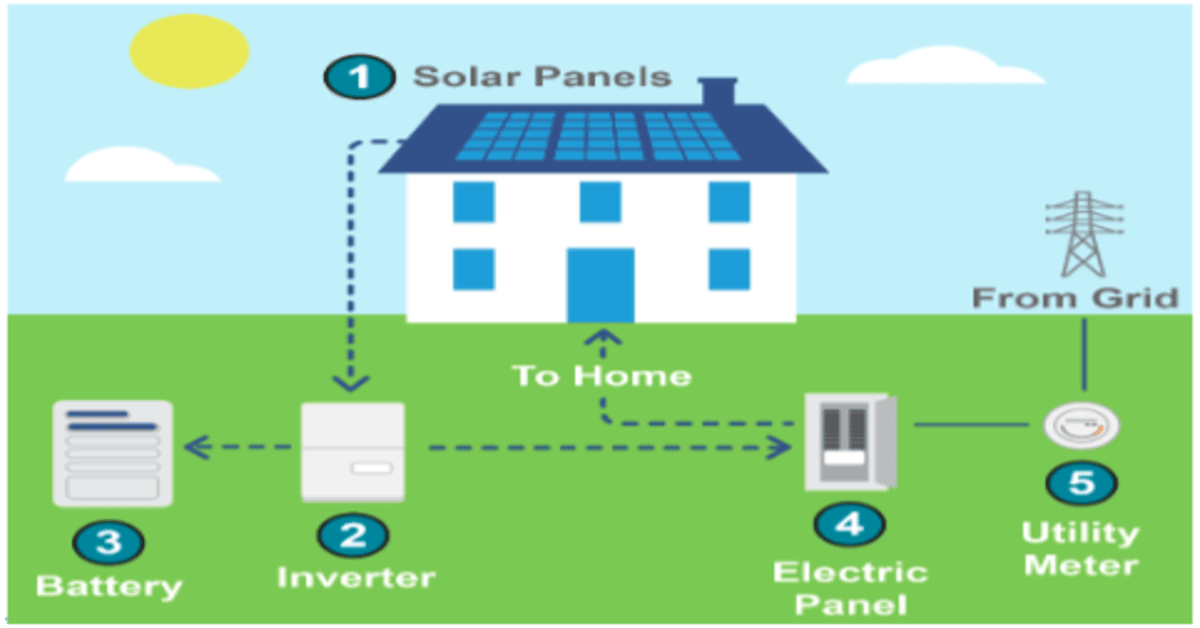
A typical system includes a battery, an inverter or battery-management equipment, controls and safety devices. The inverter converts electricity between the form used by the battery and the alternating current used by household circuits. Some systems combine the battery and inverter in one unit.
When solar panels produce more electricity than the home is using, the surplus can charge the battery instead of being exported to the grid. Later, the battery can discharge to supply some of the home’s electricity needs. A battery can also be charged from the grid, for example during cheaper periods on a time-of-use tariff, if the system and tariff allow it.
Most home batteries use lithium-ion technology. Lithium iron phosphate (LFP) and nickel manganese cobalt (NMC) are two common types, each with different characteristics. The system’s specification, installation and operating conditions matter as much as the chemistry when assessing its suitability.
Capacity and power: what do the figures mean?
Battery specifications include two figures that are easy to confuse:
- Capacity, measured in kilowatt-hours (kWh), describes how much energy the battery can store. The usable capacity may be lower than the headline capacity.
- Power, measured in kilowatts (kW), describes how quickly the battery can charge or supply electricity. It affects how many appliances it can run at once.
A larger capacity is not automatically better. The battery should be matched to the household’s electricity use, solar generation, tariff and the times when energy is needed. A qualified installer can use consumption data to help assess an appropriate size.
Potential benefits
- Greater use of solar electricity: storing surplus daytime generation can reduce the amount of electricity exported and increase the share used in the home later.
- More control over when electricity is bought: with a suitable smart tariff and compatible system, a battery may be charged when prices are lower and used when prices are higher.
- Reduced reliance on grid electricity at certain times: the battery may cover some household demand, although it will not necessarily power the whole home or last through an extended outage.
- Backup power, where supported: some systems can provide power during a grid outage, but this usually requires specific backup equipment and circuits. Not every battery installation has this capability.
Things to consider
A battery does not generate electricity. Its environmental and financial value depends on how it is charged, how often it is used, its efficiency and lifespan, and the cost of installation. Electricity is lost during charging and discharging, so stored energy is not returned in full.
Financial savings are not guaranteed. They depend on factors such as the household’s usage patterns, solar output, import and export rates, standing charges, tariff terms and the battery’s usable capacity. A system may take many years to pay back, and warranties should not be treated as a promise of a particular financial return. Compare the total installed cost and warranty conditions with realistic estimates of savings.
Without solar panels, a battery may still be used to store cheaper grid electricity for later use, but the economics depend heavily on the tariff and system controls. Check whether the tariff is available to you, whether it has conditions or exit fees, and whether the battery can respond to its pricing periods.
Battery performance can also be affected by temperature, installation location, age and charging patterns. Ask about the expected usable capacity over time, warranty length, throughput limits, maintenance requirements and what happens if the manufacturer or installer ceases trading.
Choosing and installing a system
Before choosing a battery, review a year or more of electricity bills or smart-meter data if available. Consider when the household uses electricity, whether solar panels are already installed or planned, and whether an electric vehicle or heat pump will change future demand.
Obtain written quotes that set out the battery’s usable capacity, maximum charge and discharge power, inverter arrangements, expected operation, warranty, installation work and total price. Ask whether the system can be expanded later and whether it will work with your existing solar equipment or energy tariff.
Use a suitably qualified installer with experience of battery systems. The installation should comply with relevant electrical and building requirements, including applicable provisions of BS 7671. In England, Wales and Scotland, check whether the work must be notified under Building Regulations; requirements differ across the UK. Ask the installer to explain any required notifications, commissioning, handover documents and grid-connection arrangements.
Safety and maintenance
Choose equipment intended for domestic use and installed in accordance with the manufacturer’s instructions. The installer should assess the location, ventilation, access, protection from impact and other site-specific risks. Follow the manufacturer’s guidance on maintenance and keep the area around the equipment clear.
Do not cover, move or modify a battery yourself. If the system shows a fault, becomes unusually hot, emits an unusual smell or makes unexpected noises, follow the manufacturer’s emergency instructions and contact the installer or emergency services as appropriate. Make sure everyone in the household knows where the system is and how to isolate it if instructed.
Is a home battery right for your household?
A domestic battery can be useful for households that want to make better use of solar generation, shift electricity use around a suitable tariff or add backup capability. The best choice is not necessarily the biggest battery: it is a system that fits the home’s energy needs, installation conditions and budget.
Compare independent quotes, check the technical details and warranty, and base any savings estimate on your own energy data. With careful planning and a competent installation, a battery can offer greater flexibility in how and when a home uses electricity.
9 Benefits of Domestic Battery Energy Storage Systems
- Store surplus solar electricity for later use.
- Use more of the energy your panels generate.
- Reduce reliance on grid electricity at peak times.
- Charge from the grid when tariffs are cheaper.
- Support greater control over household energy use.
- Provide backup power when configured for outages.
- Help make renewable energy more useful at home.
- Can work with solar panels and smart tariffs.
- Offer flexibility as household energy needs change.
Key Drawbacks of Domestic Battery Energy Storage Systems
- High upfront installation cost.
- Energy is lost during charging and discharging.
- Backup power may require extra equipment.
Store surplus solar electricity for later use.
A domestic battery can store surplus electricity generated by solar panels during the day, ready to use when the panels produce less, such as in the evening or on a cloudy day. This helps households use more of their own renewable energy instead of exporting it to the grid, potentially reducing the amount of electricity they need to buy.
Use more of the energy your panels generate.
A domestic battery lets you store surplus electricity generated by your solar panels during the day and use it later, such as in the evening when panels produce little or no power. This means less of your home’s solar energy goes unused or is exported to the grid, helping you make more of the electricity you generate yourself.
Reduce reliance on grid electricity at peak times.
A domestic battery energy storage system can help reduce reliance on grid electricity during peak times. It stores electricity—often surplus power from solar panels or energy bought when prices are lower—and supplies it to the home when demand or electricity prices rise. This can help households draw less from the grid during expensive periods, although the extent of the benefit depends on the battery’s capacity, the household’s energy use and the tariff available.
Charge from the grid when tariffs are cheaper.
A domestic battery can be charged from the grid when electricity prices are lower, then used later when tariffs rise. With a compatible battery and time-of-use tariff, this can help households shift some of their electricity costs away from peak-price periods. The potential savings depend on the tariff, the battery’s efficiency and capacity, and when the household uses electricity, so it is worth checking the terms and likely costs before investing.
Support greater control over household energy use.
Domestic battery energy storage systems can give households greater control over when they use electricity. By storing surplus power from solar panels or charging from the grid during cheaper tariff periods, a battery can supply some of the home’s needs later, when generation is lower or electricity prices are higher. This flexibility can help households manage their energy use more actively, although the level of control depends on the battery, tariff and household’s consumption patterns.
Provide backup power when configured for outages.
When configured for backup power, a domestic battery energy storage system can keep selected household circuits running during a power cut. Depending on the system’s capacity and output, it may supply essentials such as lighting, the fridge, internet equipment or a medical device. Backup is not automatic with every battery: it may require specific equipment, suitable wiring and professional installation. The available power and duration will also depend on the battery’s charge level and the appliances in use.
Help make renewable energy more useful at home.
Domestic battery energy storage systems can make renewable electricity more useful at home by storing surplus power generated by solar panels during the day. Instead of exporting all that excess electricity to the grid, a household can use it later—such as in the evening, when the panels are producing less. This can increase the share of home-generated renewable energy used directly in the household and reduce reliance on grid electricity.
Can work with solar panels and smart tariffs.
Domestic battery energy storage systems can work alongside solar panels and smart electricity tariffs to help households make better use of their energy. Surplus solar power generated during the day can be stored in the battery for use later, while a compatible tariff may allow it to charge from the grid during cheaper periods. The stored electricity can then be used when solar generation is low or prices are higher, helping households manage when they draw power from the grid.
Offer flexibility as household energy needs change.
Domestic battery energy storage systems can adapt as a household’s energy needs change. A suitably designed system may be expanded or adjusted as new demands arise, such as adding an electric vehicle, installing a heat pump or increasing solar generation. This flexibility can help households make better use of the electricity they generate or buy, both now and in the future. Check with the installer that any planned changes will be compatible with the battery and inverter.
High upfront installation cost.
High upfront installation cost: A domestic battery energy storage system can require a significant initial investment, particularly when the price includes the battery, inverter, electrical work and any upgrades needed to the home’s wiring. This cost may take many years to recoup through lower electricity bills, and the payback depends on factors such as energy use, solar generation and tariff rates. It is therefore worth comparing detailed quotes and realistic savings estimates before committing.
Energy is lost during charging and discharging.
A domestic battery does not return all the electricity put into it: some energy is lost as heat during charging and discharging. This round-trip inefficiency means the usable energy is lower than the amount drawn from the grid or generated by solar panels, which can reduce potential savings. The level of loss varies between systems and depends on factors such as the battery, inverter and operating conditions, so it is worth checking the manufacturer’s efficiency figures when comparing options.
Backup power may require extra equipment.
Backup power may require extra equipment. A standard domestic battery system may stop supplying electricity during a power cut, even if it still has charge, because it is designed to disconnect safely from the grid. To keep selected circuits running during an outage, the home may need additional hardware, such as a backup gateway or changeover switch, as well as electrical modifications. These add to the installation cost, so check with the installer exactly what is included and which appliances the system can support.