The EU and the Sustainable Development Goals
The Sustainable Development Goals (SDGs) are a set of 17 global goals designed to improve people’s lives, protect the planet and support lasting prosperity. Adopted by all United Nations member states in 2015 as part of the 2030 Agenda for Sustainable Development, they cover issues ranging from poverty and health to climate action, equality and international partnership.
The European Union (EU) has committed to putting the SDGs at the heart of its policies and international work. Although the goals were created by the United Nations rather than the EU, they provide a shared framework for the Union and its member states to shape a more sustainable future.
What are the 17 Sustainable Development Goals?
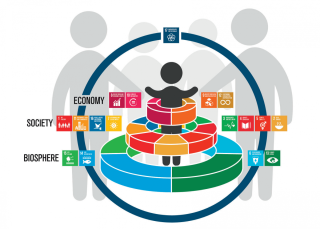
The goals are interconnected: progress in one area can support progress in others, while setbacks can have wider consequences. They are:
- No Poverty
- Zero Hunger
- Good Health and Well-being
- Quality Education
- Gender Equality
- Clean Water and Sanitation
- Affordable and Clean Energy
- Decent Work and Economic Growth
- Industry, Innovation and Infrastructure
- Reduced Inequalities
- Sustainable Cities and Communities
- Responsible Consumption and Production
- Climate Action
- Life Below Water
- Life on Land
- Peace, Justice and Strong Institutions
- Partnerships for the Goals
How the EU puts the goals into practice
SDG-related work takes place across many areas of EU policy. Climate and energy measures, for example, contribute to clean energy and climate action. Policies on employment, education and social protection relate to decent work, reduced inequalities and quality education. Rules and programmes concerning nature, farming, fisheries and resource use can support goals for life on land and below water, as well as responsible production and consumption.
The European Green Deal is one prominent framework for the EU’s transition towards a climate-neutral and resource-efficient economy. It is connected to several SDGs, particularly those concerning clean energy, sustainable industry, sustainable cities, responsible consumption and climate action. Other EU initiatives address areas such as health, research, transport, development cooperation and human rights.
Responsibility is shared between EU institutions, national governments and regional and local authorities. Businesses, universities, civil society organisations and individuals also have a part to play. Many decisions that affect everyday life — including how homes are heated, how people travel and how goods are produced — are relevant to sustainable development.
Measuring progress
Tracking progress helps policymakers and the public understand where change is happening and where more effort is needed. Eurostat monitors progress towards the SDGs in the EU using indicators covering social, economic, environmental and institutional issues. These indicators can show broad trends, but they do not always capture every local difference or the lived experience behind the figures.
Measurement also highlights how goals can compete or depend on one another. For instance, expanding renewable energy can help reduce emissions, but projects need to be planned carefully to protect ecosystems and respect local communities. Sustainable development therefore involves balancing different needs, not simply improving one indicator in isolation.
Challenges and opportunities
Delivering the SDGs remains a major challenge. Poverty and inequality persist, biodiversity is under pressure, and climate change brings growing risks. The costs and benefits of the transition are not always shared evenly. Some households, workers and regions may need targeted support as economies change, particularly where livelihoods depend on high-emission industries.
At the same time, the goals offer an opportunity to connect environmental protection with social wellbeing and economic resilience. Investment in clean energy, public transport, education and healthier communities can create benefits across several goals. Collaboration between countries and across sectors is essential, as issues such as climate change, trade and biodiversity loss do not stop at national borders.
Why the SDGs matter
The Sustainable Development Goals give the EU and its partners a common set of ambitions and a way to assess progress towards them. They encourage decision-makers to consider the wider effects of policies — on people, the environment and future generations — and to work across traditional boundaries.
Achieving the goals by 2030 requires sustained action and accountability at every level. The SDGs are not a guarantee of change, but they provide a shared direction: a fairer, healthier and more sustainable future for people and the planet.
Understanding the EU’s Approach to Achieving Sustainable Development Goals: Key Questions and Answers
- What are the EU Sustainable Development Goals?
- How do the United Nations Sustainable Development Goals relate to the European Union?
- What are the 17 Sustainable Development Goals?
- How is the EU working towards the Sustainable Development Goals?
- How does the European Green Deal support the Sustainable Development Goals?
- How does the EU measure progress towards the Sustainable Development Goals?
- Which EU policies and programmes contribute to the Sustainable Development Goals?
- What challenges does the EU face in achieving the Sustainable Development Goals by 2030?
- How can individuals, businesses and local communities support the Sustainable Development Goals in the EU?
What are the EU Sustainable Development Goals?
The EU Sustainable Development Goals are the 17 global goals set by the United Nations for a fairer, more prosperous and sustainable future by 2030. The EU and its member states use them as a shared framework to guide action on issues such as poverty, health, education, equality, clean energy, sustainable cities and climate change. The goals are connected, recognising that progress in one area can support progress in others.
How do the United Nations Sustainable Development Goals relate to the European Union?
The United Nations Sustainable Development Goals (SDGs) provide a shared global framework for tackling challenges such as poverty, inequality, climate change and biodiversity loss. The European Union has committed to advancing all 17 goals through its policies, programmes and international partnerships, while EU member states are responsible for putting them into practice nationally. The SDGs therefore guide EU action across areas including climate and energy, social policy, education and sustainable economic development, and offer a way to monitor progress towards a fairer, more sustainable future.
What are the 17 Sustainable Development Goals?
The 17 Sustainable Development Goals (SDGs), adopted by the United Nations in 2015, are: No Poverty; Zero Hunger; Good Health and Well-being; Quality Education; Gender Equality; Clean Water and Sanitation; Affordable and Clean Energy; Decent Work and Economic Growth; Industry, Innovation and Infrastructure; Reduced Inequalities; Sustainable Cities and Communities; Responsible Consumption and Production; Climate Action; Life Below Water; Life on Land; Peace, Justice and Strong Institutions; and Partnerships for the Goals. Together, they provide a framework for tackling global social, economic and environmental challenges by 2030.
How is the EU working towards the Sustainable Development Goals?
The EU is working towards the Sustainable Development Goals by integrating them into its policies, laws, funding programmes and international partnerships. Initiatives such as the European Green Deal support action on climate change, clean energy and sustainable production, while programmes in areas including education, health, employment and social inclusion contribute to other goals. EU institutions and member states track progress using indicators, helping to identify where further action is needed. Businesses, local authorities and civil society also play an important role in turning these shared commitments into practical change.
How does the European Green Deal support the Sustainable Development Goals?
The European Green Deal supports the Sustainable Development Goals by guiding the EU’s transition towards a climate-neutral, resource-efficient economy. Its measures to cut greenhouse gas emissions, expand clean energy, protect biodiversity and promote sustainable production and consumption contribute directly to goals such as Climate Action, Affordable and Clean Energy, Responsible Consumption and Production, and Life on Land. The Green Deal also connects environmental progress with economic and social wellbeing, although its success depends on ensuring that the transition is fair and that its benefits are shared across communities.
How does the EU measure progress towards the Sustainable Development Goals?
The EU measures progress towards the Sustainable Development Goals using a set of indicators monitored by Eurostat, the EU’s statistical office. Drawing on data from EU countries and other official sources, Eurostat publishes an annual assessment of trends across the 17 goals. The indicators help show where progress is being made and where further action may be needed, although they cannot capture every local difference or explain the causes behind each trend.
Which EU policies and programmes contribute to the Sustainable Development Goals?
A wide range of EU policies and programmes contribute to the Sustainable Development Goals (SDGs). The European Green Deal supports goals on climate action, clean energy and sustainable production, while the Common Agricultural Policy and EU measures to protect biodiversity contribute to goals on food, land and ecosystems. Cohesion policy and the European Social Fund Plus support jobs, skills and social inclusion; Horizon Europe funds research and innovation; and Erasmus+ promotes education and cooperation. The EU also advances the goals through initiatives such as NextGenerationEU and its international partnerships. Their contribution is cross-cutting, with progress depending on how policies are designed and put into practice across the EU and its member states.
What challenges does the EU face in achieving the Sustainable Development Goals by 2030?
The EU faces several challenges in achieving the Sustainable Development Goals by 2030, including persistent poverty and inequality, pressure on biodiversity, and the need to cut emissions quickly while keeping the transition fair and affordable. Progress can vary between countries and communities, and goals may sometimes involve difficult trade-offs, such as expanding renewable energy while protecting nature and local interests. Economic uncertainty, limited funding and the need for close co-operation between EU institutions, national governments, businesses and communities also make delivery more complex.
How can individuals, businesses and local communities support the Sustainable Development Goals in the EU?
Individuals, businesses and local communities can support the Sustainable Development Goals by making practical, informed choices and working together. Individuals can reduce waste and energy use, choose sustainable transport, shop responsibly and take part in local initiatives. Businesses can improve working conditions, cut emissions, use resources efficiently and report honestly on their social and environmental impact. Local communities can support inclusive planning, protect green spaces, improve access to services and bring residents, organisations and public authorities together to address local needs. These actions are most effective when they are aligned with wider policies and measured over time, helping turn the SDGs into meaningful progress across the EU.